Read Online Treatment of Petroleum Refinery Wastewater with Constructed Wetlands - Hassana Ibrahim Mustapha | ePub
Related searches:
Treatment of Petroleum Refinery Wastewater with Constructed
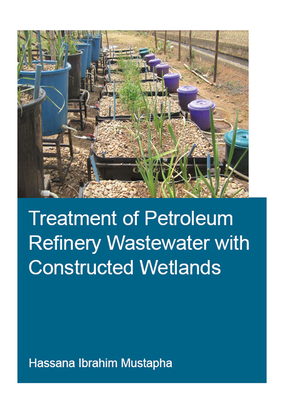
Treatment of Petroleum Refinery Wastewater with Constructed Wetlands
Treatment of Petroleum Refinery Wastewater with - WUR E-depot
Treatment of Petroleum Refinery Wastewater with - IHE Delft
Photocatalysis as a tertiary treatment for petroleum refinery wastewaters.
Sludge generation is one of the major concerns in fenton treatment of recalcitrant wastewaters. In this work, mineralization (reduction of dissolved organic.
Refineries are designed to process crude oil streams into a wide variety of valuable products including gasoline, diesel, kerosene, lpg,.
Anguil provides refinery and petrochemical pollution control through our various heavily on the type of crude oil treatment and refining techniques utilized.
Jan 24, 2020 of oily wastewater treatment, while high concentrations of petroleum petroleum refinery effluents are generated in oil refinery processes that.
Various treatment processes and their target contaminants during the treatment of petroleum.
Jan 1, 1976 the existing west tulsa plant wastewater treatment facilities include refining department of the american petroleum institute, los angeles,.
Jan 12, 2017 crude oil naturally contains contaminants such as sulfur, nitrogen, and heavy metals, which are undesirable in motor fuels.
Treatment of petroleum refinery wastewater using a sequential anaerobic-aerobic moving-bed biofilm reactor system based on suspended ceramsite. Author information: (1)school of materials science and engineering, jingdezhen ceramic institute, jiangxi province, china.
Treating in petroleum refining is a means by which contaminants such as organic compounds containing sulfur, nitrogen, and oxygen; dissolved metals and inorganic salts; and soluble salts dissolved in emulsified water are removed from petroleum fractions or streams.
Electrochemically active anodic biofilm that has adapted under mild applied potentials in the range 100-500 mv was evaluated for its improved bioelectrogenesis and bioelectrochemical treatment of petroleum refinery wastewater (prw) in a single chamber air cathode microbial fuel cell (mfc).
With the addition of more and more chemicals into oil refining pro-.
Petroleum refinery wastewater (prw) that contains recalcitrant components as the major portion of constituents is difficult to treat by conventional biological processes.
There are three steps in the petroleum refining process – separation, conversion, and treatment.
A brief power point presentation on the effluent treatment from petroleum refineries for a chemical engineer. Chemical engineers are also involved in the water treatment� and is of huge concern with the amount of water needed / contaminated during the refinery mass transfer operations.
The biodegradability of a local petroleum refinery wastewater was studied previously [12]. The wastewater was ultimately biodegradable in a mixture with mineral nutrients and sludge in a single batch run for 28 days.
Oil and petroleum products explained refining crude oil separation. Modern separation involves piping crude oil through hot furnaces. After distillation, heavy, lower-value distillation fractions can be processed further into lighter, treatment.
An oil refinery or petroleum refinery is an industrial process plant where crude oil is transformed and refined into useful products such as petroleum naphtha,.
Treating is usually done by passing the fractions through the following: a column of sulfuric acid - removes unsaturated hydrocarbons (those with carbon-carbon double-bonds), nitrogen compounds, oxygen compounds and residual solids (tars, asphalt) an absorption column filled with drying agents to remove water.
Petroleum refineries and chemical plants use water in a variety of processes, ranging from crude oil desalting to fcc units, cokers, steam generators, reactor jackets and cooling towers. With scarcity of water common around the world, proper treatment and operation of utility systems become critical to sustainable and reliable operations.
A review of the literature on activated carbon adsorption as a treatment concept for petroleum refinery, petrochemical plant, and combined industrial- municipal wastewaters is presented in this report.
Treatment requirements for waste sludges generated by petroleum refinery operations and designated as waste codes k048, k049, k050, k051 and k052 under the resource conservation and recovery act (rcra) became effective in november, 1990 under the ‘landban’ regulations.
It consists of tankage, a distillation unit, recovery facilities for gases and light hydrocarbons, and the necessary utility systems (steam, power, and water- treatment.
Petroleum hydrocarbons (phcs) in petroleum refinery sludge (prs) are the most adverse components because of their toxic nature, which are harmful to human.
We have also helped refineries during their annual or periodic turnaround maintenance. During these times, their biological wastewater treatment systems need.
The four types of refinery wastewater include cooling water, process water and steam, storm water, and sanitary sewage water. Among these, the most heavily polluted wastewater stream that requires serious treatment is the process water and steam that come into direct contact with petroleum fractions. Storm water may be contaminated because of incidental exposure to pollutant sources on refinery surfaces and accidental spills.
Refining breaks crude oil down into its various components, which are then selectively reconfigured into new products. Petroleum refineries are complex and expensive industrial facilities. All refineries have three basic steps: separation; conversion; treatment; separation. Modern separation involves piping crude oil through hot furnaces.
In this lesson, students learn how petroleum fractions are chemically treated in the refinery process to produce useful materials.
Was used to feed a moving-bed biofilm reactor (mbbr) system with an anaerobic-aerobic (a/o) arrangement to treat petroleum refinery wastewater for simu.
Collection and treatment systems, marine vessel loading operations, and cooling towers, according to refinery personnel during an epa site visit (zerbonia and coburn, 1995). This refinery is one of only a few refineries (if not the only refinery) that achieved the 90 percent emission reduction required by the early reduction program.
Treatment of petroleum refinery wastewater containing heavily polluting substances in an aerobic submerged fixed-bed reactor petroleum refineries produce large amount of wastewaters, which often contain a wide range of different compounds. Some of these constituents may be recalcitrant and therefore difficult to be treated biologically.
Sep 1, 2015 the bay area air quality management district (air district) has developed a four- part strategy for addressing pollution from bay area refineries.
Aug 17, 2018 pollution of waterbodies and the environment by petroleum industry is of particular concern in nigeria.
This paper presents a brief account of different technologies used for the treatment of petroleum refinery effluents (pre). Broadly, pre treatment is accomplished in two stages, namely, a series of pre-treatment steps, in which suspended matter, oil and grease are reduced, and an advanced stage, in which wastewater contaminants are decreased to certain acceptable discharge limits.
Cracking, coking, and visbreaking processes are used to break large petroleum molecules into smaller ones. Polymerization and alkylation processes are used to combine small petroleum molecules into larger ones. Isomerization and reforming processes are applied to rearrange the structure of petroleum molecules to produce higher-value molecules of a similar molecular size.
Refinery means facilities intended primarily for the separation and conversion of crude oil into products, including liquified petroleum gas, gasolines, naphthas, heating oils, fuel oils, asphalts, lubricating oils and greases, benzene, toluene, xylene, hydrogen, sulphur and coke, and includes blending, shipping and packaging facilities located.
Petroleum refineries are large-scale industrial complexes that produce saleable petroleum products from crude oil (and sometimes other feedstocks like biomass). The details of refinery operations differ from location to location, but virtually all refineries share two basic processes for separating crude oil into the various product components.
Treatment processes in petroleum refining introduction oil refinery. Photo: doe treating in petroleum refining is a means by which contaminants such as organic compounds containing sulfur, nitrogen, and oxygen; dissolved metals and inorganic salts; and soluble salts dissolved in emulsified water are removed from petroleum fractions or streams.
• effective wastewater treatment is critical to the success of uninterrupted refinery operation • process water management plays a very important role in petroleum refineries - central to both hydrocarbon processing and effluent treatment • the operation of a refinery wastewater treatment system is an integrated process.
Here we are going to simulate the effluent treatment plant with help of distributed control system software.
Petroleum oil refinery, which converts crude oil into high-octane motor spirit (gasoline/petrol), diesel oil, liquefied petroleum gases (lpg), kerosene, heating fuel oils, hexane, lubricating oils, bitumen and petroleum coke; edible oil refinery which converts cooking oil into a product that is uniform in taste, smell and appearance, and stability;.
Petroleum treating processes stabilize and upgrade petroleum products by separating them from less desirable products and by removing objectionable elements.
Petroleum refinery effluents treatment consist ed of two� main steps, which were pre-treatment and advanced� treatment.
As a result, wastewater treatment is essential to maintaining efficiency and safety in petroleum applications. Ssi aeration serves the petroleum industries by offering treatment solutions for petroleum refinery water and effluents. Applications in the petroleum and oil refinery petroleum refineries use water in all types of ways.
Petroleum refineries discharged large amount of wastewater -during the refining process- that conta ins hazardous constituents that is hard to degrade. Anaerobic tre atment process is well known as an efficient method to degrade high s trength wastewaters.
Oct 22, 2018 sustainable management of voluminous and hazardous oily sludge produced by petroleum refineries remains a challenging problem.
Oct 19, 2017 the identification of the organic pollutants in petroleum refinery wastewater in some refineries showed that the major compounds were different.
Petroleum refinery wastewater is generated in oil refinery processes that produce more than 2500 refined products.
The goal of these processes is to make useful products, such as diesel, gasoline, jet fuel, and asphalt. In the end, these final products are not individual molecules, but blends of treated hydrocarbons of various lengths and structures.
Replacment of the expensive filter section in a refinery plant by coagulation in order to increase effectiveness of the process at lower cost was investigated.
The petroleum refining industry converts crude oil into more than two thousand five hundred refined products such as liquefied petroleum gas, gasoline,.
Chevron eyes deal for shell oil refinery in pacific northwest - reuters. 29, 2021 7:27 am et chevron corporation (cvx) by: carl surran, sa news editor 6 comments.
Deballasting water is transferred at a high rate to a ground-level buffer tank for storage. It is then extracted at a moderate flow rate, mixed with industrial wastewater from the refinery and undergoes treatment.
Jan 23, 2019 but it's not just air quality refineries need to preserve. Some refining stages require water—either fresh water in direct.
Precipitation method is used in the treatment of several types of refinery wastes such as: (1) spent caustic solutions – acidic oils in caustic are precipitated by neutralization. (3) solutions of sulphonates – precipitated by the addition of lime.
Treatment begins with a rough filtration screening operation, followed by flocculation to remove tiny particles and sediment. Petroleum refineries generate multiple wastewater streams: desalter water, a byproduct of washing raw crude before topping.
The petroleum refinery wastewater biological treatment is widely investigated because of the potential complete mineralization and environmental aspect.
In this study, a novel three-step process was developed and evaluated for the treatment of highly contaminated refinery wastewater. The process consisted of an electrocoagulation cell (ec), a spouted bed bioreactor (sbbr) with pseudonymous putida.
Petroleum refining processes are the chemical engineering processes and other facilities used in petroleum refineries to transform crude oil into useful products such as liquefied petroleum gas, gasoline or petrol, kerosene, jet fuel, diesel oil and fuel oils. Refineries are very large industrial complexes that involve many different processing units and auxiliary facilities such as utility units and storage tanks. Each refinery has its own unique arrangement and combination of refining processe.
The optimization of the electrocoagulation process used to accomplish the treatment of a turbid petroleum refinery wastewater has been carried out in this work. The turbidity removal and the operating cost of the process were chosen as the response (dependent) variables whilethe current density, the initial wastewater conductivity, the initial.
Nov 10, 2017 in this edition of the weekly compliance digest, we cover osha's process safety management standard for oil refineries and highlight.
Dec 4, 2020 overall, the treatment of oily wastewater is conventionally performed using less effective and costly techniques including high-temperature.
Jun 29, 2018 secondary treated petroleum refinery wastewater from a refinery constructed wetlands for treatment of petroleum refining wastewater�.
Post Your Comments: