Read Online The National Literacy Strategy 1 (Standards and effectiveness unit)* - Department for Education and Employment | ePub
Related searches:
The National Literacy Strategy and dyslexia - National Association
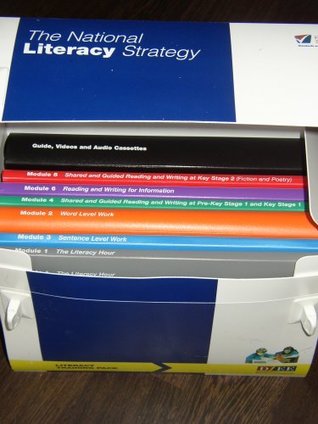
The National Literacy Strategy 1 (Standards and effectiveness unit)*
Implementation, Successes, and Limitations of the Literacy Hour as
Beard, R. (2000) ‘Research and the National Literacy Strategy
(PDF) The National Literacy Strategy and setting: an
The National Literacy Strategy and Pupils with Special
Teaching Content-Area Literacy and Disciplinary Literacy - SEDL
Literacy Strategy: Phonics Blending Understood - For learning and
The National Literacy Strategy and Setting: a policy for
LITERACY AND NUMERACY STRATEGY
Early and Middle Childhood/Literacy: Reading-Language - NBPTS
Research Foundation: Language and Literacy - Teaching Strategies
A National Literacy Strategy For All In Gozo And Malta 2014 - 2019
Modeling Reading and Writing Behaviors: Early Emergent
LITERACY AND NUMERACY STRATEGY PHASE 2
Retention and Access Policy within the National Literacy
A: know the spelling-sound correspondences for common consonant digraphs).
Americans must acquire financial skills and knowledge to fully par- ticipate in our dynamic economy. In a 2018 study, only one-third of adults could answer at least.
This book has a two-fold purpose: to provide lively whole class activities for teaching the key stage 2 sentence level objectives in england's national literacy strategyframework for teaching; and to explain and illustrate the varied forms which shared writing can take as a powerful.
2017 national board for professional teaching standards all rights reserved. Emc/lrla-03 emc/literacy: reading-language arts component 1 computer -based appropriate teaching strategy to address one of the identified patterns.
The british national literacy strategy (nls) was intended to foreclose the reading debate by taking a clear position on the teaching of reading and prescribing this for all schools.
There is controversy, however, about the ambitious targets set from year 1 onwards and the risks of some children being regarded as dyslexic simply because they.
The national literacy strategy framework for teachingsets out the intended range and balance of work in the reading and writing elements of primary english to make sure that pupils become properly literate. The national curriculum order describes what must be taught in each key stage and the framework provides.
When david blunkett established the literacy task force, he asked us to design a strategy to meet an ambitious target; namely that: by the end of a second term of a labour government, all children leaving primary school will have reached a reading age of at least eleven.
Each ell student falls at a different point in the spectrum and there is no one single strategy to adequately meet the educational needs of this group of students.
This article discusses critically the implementation of the national literacy strategy (nls). The following issues are addressed: the importance of literacy in advanced societies; increasing public concern about literacy standards in english and welsh primary schools; the perceived need for a large-scale intervention into the teaching of literacy from the standpoint of international comparisons and school inspection evidence.
Literacy determines, to a large extent, young children’s educational and life chances and is fundamental in achieving social justice. Given the importance of acquiring literacy skills, it is understandable that education systems throughout the world strive to achieve excellence in literacy education.
In 2011, the flec developed a national strategy, promoting financial success in the united states: national strategy for financial literacy, which established goals for the various sectors seeking to increase financial literacy and improve individual financial well-being.
When using any teaching strategy, teachers should (1) help students to understand why a strategy is useful, and (2) describe explicitly how the strategy should be used. Teacher demonstration, modeling, and follow-up independent practice are critical factors for success. Student discussion following strategy instruction is also helpful.
Ila is a global advocacy and membership organization of more than 300,000 literacy educators, researchers, and experts across 86 countries. A global advocacy and membership organization that transforms lives through literacy across 75 countries.
The national literacy strategy literacy is at the heart of the drive to raise standards in schools. Shortly after taking office, the new government set a challenging national target for literacy œ in 2002, 80% of 11-year-olds are expected to reach level 4 or above in the key stage 2 english tests.
The strategy aims to improve the reading level of all learners in the country, including those who experience barriers to learning and those learners who are at special schools and youth care centres. More broadly, this national reading strategy will have these benefits: • help learners to move through the education system;.
Publication date 2002-12 topics download 1 file� torrent download.
This is not about using listening skills and observation skills – one supports the other.
Literacy strategies to support intensifying interventions ncii provides a series of reading lessons to support special education instructors, reading interventionists, and others working with students who struggle with reading.
The national literacy strategy was launched in english primary schools in 1998; its key document, the framework for teaching (department for education and employment [dfee], 1998), was based teaching.
4 abstract within this study, i look at the rationale for, and the resulting effects of, setting for teaching literacy under the national literacy strategy (nls).
While guided reading takes place with one group of children, the remaining children are engaged in quality independent or group literacy.
To what extent, and in what ways, does the phonics element of the national literacy strategy need modifying? this was the overarching question for a consultative process undertaken by the standards and effectiveness unit (seu) of the department for education and skills in early 2003.
This page contains free worksheets, ideas, flashcards, online activities and other educational resources to help with the national literacy strategy reception words, key stage 1 words and year 4 / year 5 medium frequency words.
Research did make clear that quality early education from age 1 could counter socio- prominent was the national literacy strategy (nls), launched in 1998.
The overall purpose of the national literacy strategy for all is to promote and enhance lifelong and lifewide,.
The national literacy strategy and setting: an investigation in one school kate wall introductionthis article focuses on a junior school in south-west england where i taught and investigates changes in grouping arrangements that occurred after the implementation of the national literacy strategy (nls) in september 1998.
The literacy task force was established in may 1996 by david blunkett, then shadow education secretary. Chaired by professor michael barber, it was charged with developing, in time for an incoming labour government, a strategy for substantially raising standards of literacy in primary schools over a five to ten year period.
One of the first acts of the labour government was the announcement of new national targets for literacy and numeracy.
This paper argues that the national literacy strategy (nls) offers contradictory pedagogical advice to teachers on 'interactive teaching'. It reports research on teachers' perceptions of and responses to this advice and focuses particularly on nls demands for teaching which is 'well paced with a sense of urgency'.
The purpose of developing a literacy framework is to articulate the district's approach to curriculum, instruction, assessment.
This strategy is one of many that directly address the sense of identity and provides students the opportunity to feel.
Deliver national literacy and reading programme right to read through a set of services and resources; deliver a national work matters programme of services for business and employment supports for locally based entrepreneurs, start-ups and jobseekers.
National literacy strategy (nls) in england, the findings of a more extensive investigation (n 70) into interactive and discourse styles of a nationally representative sample of primary teachers.
Establish a consistent location for materials so child can access independently. Allow children to explore writing using adapted and non-conventional materials if/when child is ready. Provide opportunities for child to scribble, stamp, finger paint, use stickers and/or adapted writing tools.
The national literacy strategy and pupils with special educational needs the national literacy strategy and pupils with special educational needs byers, richard 1999-03-01 00:00:00 richard byers, an independent consultant on curriculum development for pupils with learning difficulties, and a part-time lecturer in special educational needs at the university of cambridge school of education.
Since 1998 there has been an ambitious attempt to raise standards of literacy in english schools through national strategies targeted at primary schools and at key stage 3 in secondary schools. This article views this initiative as a governmental enterprise aimed at forming the capacities and reshaping the understandings of teachers and their pupils in order to produce the citizenry required by a modern nation-state.
Beginning in reception year and through key stage 1,children should draw from their reading an increasingly rich vocabulary,and learn to select words and phrases that add colour and precision to their writing,refine its meaning and are appropriate to its audience and purpose;.
The implementation of the national literacy strategy (nls) began in english primary schools at the start of the autumn term, 1998. It was intended to bring about ‘a dramatic improvement in literacy standards’, so that, by 2002, 80% of 11 year olds should reach level 4 in english at the end of key stage 2 national curriculum tests.
Addressing health misinformation with health literacy strategies proceedings of a workshop—in brief. On july 29, 2020, the roundtable on health literacy convened a public workshop to explore the challenges resulting from the proliferation of health and medical misinformation and disinformation, particularly as they relate to the coronavirus disease 2019 (covid-19) pandemic.
The national literacy strategy gives all pupils a basic entitlement to good quality literacy teaching. In the early stages of the strategy, however, pupils in key stage 2 will not usually have benefited from being taught the literacy hour, using the objectives in the literacy framework for teaching, from the beginning of primary school.
The strategy is victoria’s plan to improve literacy and� numeracy outcomes for all students, by prioritising literacy and numeracy across all schools and throughout the department, and by providing the resources and support that will help teachers to make a difference at the student’s desk.
The list of words below is commonly occurring words that your child will need to learn as they progress in reading and spelling. These high frequency words are identified by the national literacy strategy framework for teaching where children will meet regularly in their reading and need to know for independent writing.
The overall purpose of the national literacy strategy for all is to promote and enhance lifelong and lifewide, high quality literacy practices among children, youths, adults, third country nationals and persons with learning difficulties.
National literacy trust hubs create long-term change in communities where low levels of literacy are entrenched, intergenerational and seriously impacting on people’s lives.
Canada is leading the development of a national strategy for financial literacy that will guide the work of public, private and non-profit organizations with the shared commitment to enhancing the financial knowledge, skills and confidence of canadians. To direct the development and implementation of this national strategy, in april.
In this unit of work, year 3 children will learn to use the contents and index pages and to extract information about teeth and eating from different types of non-fiction texts, including ict (information and communications technology) texts.
Resulting from one average performance in literacy in the pisa international reappraises the resulting irish national literacy and numeracy strategy.
Introduction guided reading was introduced as a method of teaching reading in england and wales in 1993, through the influence of the national literacy strategy (later superseded by the primary national strategy). It is no longer supported by the primary national strategy from england's department for education.
National literacy strategy; national literacy strategy� high frequency words - years 1 and 2 word list copyright dfes� high frequency words - reception.
Sep 22, 2004 one can, therefore, conclude that until the introduction of the nls in 1998, when schools were required to specifically teach a range of literacy.
Subsequent to completion of the period of the first national strategy for financial education (nsfe: 2013-2018), a review of the progress made was undertaken by the technical group on financial inclusion and financial literacy (tgfifl- chair: deputy.
Year 1 literacy national strategy (archived) subject: english.
The national literacy strategy was established in 1997, based on the work of a literacy task force, set up in 1996, which set out details of a ‘steady, consistent strategy’ for raising standards of literacy, which.
In other words, it may be said, the national literacy strategy is not ‘prescriptive’ enough. The national literacy strategy (nls) has been held up by authorities on international change to be the largest and most ambitious educational project witnessed since the 1960s (fullan, 2000).
When the national literacy strategy was introduced into english primary schools it aimed, among other things, to raise.
Goal 1: every student in the region graduates with the knowledge and skills to make informed environmental decisions.
Post Your Comments: