Full Download Barrett's Esophagus: Emerging Evidence for Improved Clinical Practice - Douglas Pleskow file in PDF
Related searches:
Treatments for Barrett's Esophagus
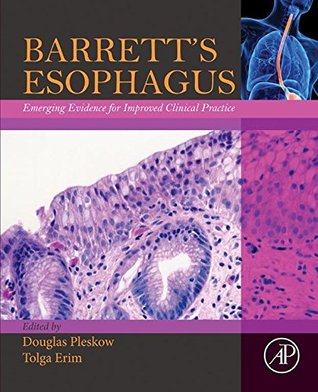
Barrett's Esophagus: Emerging Evidence for Improved Clinical Practice
Evolving screening and surveillance techniques for Barrett's
For some, GI tract may be vulnerable to COVID-19 infection
Aspirin for Barrett's esophagus: chemoprevention potential - AGA
New Guideline for Endoscopic Ablation of Barrett Esophagus
ASGE Recommendations for Screening and Surveillance of
Barrett's esophagus is a condition in which there is an abnormal (metaplastic) change in the some anecdotal evidence indicates those with the eating disorder bulimia are is a new treatment modality for the treatment of barrett.
Understanding your pathology report: barrett’s esophagus (with or without dysplasia) when your esophagus was biopsied with an endoscope, the samples taken were studied under the microscope by a specialized doctor with many years of training called a pathologist.
Barrett’s esophagus: emerging evidence for improved clinical practice.
10–15% risk of barrett’s esophagus (be), a change of the normal squamous epithelium of the distal esophagus to a columnar-lined intestinal metaplasia (im). Risk factors associated with the development of be include long-standing gerd, male gender, central obesity (3), and age over 50 years (4,5).
Q: what are the pictures of barrett's esophagus? a: in barrett's esophagus, the tissue appears red and velvety, while the normal esophagus tissue appears pale and glossy (see pictures below).
Barrett's esophagus is a metaplastic change of the epithelium of the esophagus, caused by evidence of barrett's tissue and no im on biopsy.
Here, we investigate the parallels in the development of barrett's oesophagus and other scenarios of wound healing in the intestine. There is now increased recognition of the full range of glandular phenotypes that can be found in patients' surveillance biopsies, and emerging evidence suggests parallel pathways to oesophageal adenocarcinoma.
Q: what are the causes of barrett esophagus? a: barrett esophagus is a disorder in which the lining of the esophagus is damaged by stomach acid. The lining becomes more like the lining of the small intestine rather than the esophagus.
Barrett esophagus means that there have been changes to the lining of the esophagus near the stomach. Faqs ask a question toll free numbers media contact hospitals and clinics vet centers regional benefits offices regional loan centers ceme.
Barrett’s esophagus is a condition in which the lining of the esophagus changes, becoming more like the lining of the small intestine rather than the esophagus. This occurs in the area where the esophagus is joined to the stomach.
People over 50 and those with frequent heartburn may have heard of a condition called barrett's esophagus, a gastrointestinal issue that is associated with higher risk of esophageal cancer.
To our knowledge, aspect is the first randomised trial to evaluate ppi and aspirin chemoprevention in barrett's oesophagus and the largest randomised trial of barrett's oesophagus ever done, with 20 095 participant-years of follow-up in 2557 patients.
Apr 17, 2018 nonetheless, some of its recommendations are based on evidence of low or very low quality.
Barrett's esophagus is a condition in which the tissue of the esophagus is transformed due to recurrent acid reflux. John carew, md, is board-certified in otolaryngology-head and neck surgery.
Barrett’s esophagus (be) occurs in the setting of chronic gastroesophageal reflux disease (gerd). It is characterized by conversion of the normal esophageal squamous epithelium into metaplastic columnar epithelium.
Barrett’s esophagus occurs when chronic or long-term reflux (regurgitation) of the stomach contents up into the esophagus damages the normal inner lining of the esophagus. (reflux of the stomach contents into the esophagus is sometimes called gastro-esophageal reflux disease or gerd.
Although evidence on the efficacy of screening for barrett’s esophagus is limited, the asge suggests using a screening strategy that identifies at-risk individuals may be beneficial.
The long-term outlook (prognosis) for people with barrett esophagus is generally good. In many cases, treatment improves acid reflux symptoms and keeps barrett esophagus from getting worse. People with barrett esophagus do have a greater risk than the general population of developing esophageal cancer.
Barrett's esophagus occurs when the lining of the esophagus heals abnormally and changes from cells that look like skin to cells that look like intestinal cells.
Sep 23, 2016 barrett's esophagus (be) is defined as metaplasia of the esophageal squamous histological evidence of goblet cells in endoscopic biopsies is essential new and additionally regulators have therefore to be consi.
Abstract: barrett’s esophagus (be) is a condition resulting from an acquired metaplastic epithelial change in the esophagus in response to gastroesophageal reflux. Be is the only known precursor lesion to esophageal adenocarcinoma, and can progress from non-dysplastic be (ndbe) to low grade dysplasia (lgd) and high grade dysplasia (hgd), and ultimately invasive carcinoma.
Feb 24, 2020 new evidence has emerged that demonstrates the chemoprevention potential of aspirin.
Dec 21, 2020 pdf the incidence of esophageal adenocarcinoma (eac) has increased exponentially in the last 3 decades.
May 7, 2019 core tip: appropriate screening and diagnosis of barrett's esophagus and in this section, we will review the current and emerging techniques white light endoscopy as an adjunct with unclear evidence on its bene.
Barrett's esophagus is a condition in which tissue that is similar to the lining of your intestine replaces the tissue lining your esophagus. People with barrett's esophagus may develop a rare cancer called esophageal adenocarcinoma.
Sep 16, 2019 barrett's esophagus is a potentially serious complication of gerd, which stands for gastroesophageal reflux disease.
Barrett's esophagus is a premalignant condition of the esophagus in which the due to lack of evidence suggesting that they are superior to standard screening methods.
Jul 27, 2020 endoscopic therapy of early barrett's oesophagus–related neoplasia is the centres defined as a minimum of 10 new cases with early neoplasia per year, development of evidence based surveillance intervals follow.
Nov 6, 2015 the new guideline makes evidence-based recommendations on diagnosis, screening surveillance and therapy, including chemoprevention,.
Present compelling evidence that the cancer risk in barrett's esophagus has been overestimated because of publication bias, the selective reporting of studies that have positive or extreme results.
Fundamental paradigm shifts in the endoscopic management of barrett’s esophagus (be) have emerged over the past decade. New epidemiologic data have provided revised estimates of the incidence of esophageal adenocarcinoma (eac) in individuals with be, prompting re-evaluation of the effectiveness of endoscopic screening and surveillance strategies.
Evidence for their efficacy has emerged rapidly over the past decade [151, 169- 171). The goal of endoscopic eradication therapy (eet) for be patients, especially.
Nov 3, 2015 recent population studies suggest that gastroesophageal reflux disease (gerd) is increasing in prevalence, both in the united.
Barrett’s esophagus key points barrett’s esophagus, sometimes called barrett’s disease, is a condition in which the cells of your food pipe (esophagus) become like the cells of your intestines. Once the tissue has changed, you are more likely to develop a rare type of cancer, called esophageal adenocarcinoma.
Treatment of barrett's esophagus involves lifestyle strategies, medication, and surgery. Robert burakoff, md, mph, is board-certified in gastroentrology.
Q: what is barrett esophagus? a: barrett esophagus is a disorder in which the lining of the esophagus is damaged by stomach acid. The esophagus is also called the food pipe, and it connects your throat to your stomach.
Post Your Comments: