Read Neighbourhood Planning and Localism: Power to the People? - Sue Brownill | PDF
Related searches:
Localism and neighbourhood planning: Power to the people? on
Neighbourhood Planning and Localism: Power to the People?
The impact of neighbourhood planning and localism on house
Local Plans and Neighbourhood Plans: The Interface
Spatial Planning and the New Localism - Bookshop
Neighbourhood planning and the decline of localism The Planner
(PDF) Neighbourhood planning and the production of spatial
Researching the interactions between local plan making and
Neighbourhood planning and the revised NPPF
Localism and Neighbourhood Planning : Power to the People? by
Localism and neighbourhood planning - ResearchGate
Localism and neighbourhood planning Taylor & Francis Group
Localism and neighbourhood planning - City of London
Policy Press Localism and Neighbourhood Planning - Power to
Toolkits and Guidance - Locality Neighbourhood Planning
Planning and Localism Too much too soon?
Neighbourhood planning: the London experience Trust for London
Localism at the neighbourhood level: London borough governance
The Power of Neighbourhood Planning - Local Government Lawyer
Localism Act: Neighbourhood Plans and Community Right To
Neighbourhood Planning and Community-Led Housing CLH Toolkit
Localism Bill: neighbourhood plans and community right to build
Neighbourhood Planning and Localism in Action
PlanLoCaL Localism and Neighbourhood Planning
Neighbourhood plans and Community Right to Build: impact
NEIGHBOURHOOD PLANS: PROGRESS SO FAR AND WHAT NEXT
Neighbourhood Planning is part of the new Localism Act - Camden
Briefing note How Local Plans and Neighbourhood Plans fit
Neighbourhood Plans - Tonbridge and Malling Borough Council
Neighbourhood Planning Newark and Sherwood District Council
Boughton and Dunkirk Neighbourhood Plan Home
Neighbourhood planning gives communities more control over the future of their area by giving local people the chance to have their say on what happens where they live. The proposals are founded on the principles of localism, which means more involvement by planning authorities, local people, businesses, house builders and developers rather.
The localism act empowers local communities to take responsibility for the development of planning policy for their neighbourhood through a neighbourhood plan and, where communities wish to bring forward small scale development themselves, to give them a community right to build.
This chapter provides brief background to the emergence of the localism agenda in its current form in english politics, describes the aims of localism and the opportunities and requirements of neighbourhood planning as one specific form of localism, and discusses the characteristics and criticisms of localism as identified in existing literature.
Neighbourhood planning is a way local people can shape development of the communities in which they live. The localism act 2011 reformed the planning system and introduced a new tier of statutory plans to be prepared at the neighbourhood level by parish councils or town councils (where they exist) or in other areas, community members acting together as a neighbourhood forum.
What is neighbourhood planning? the localism act 2011 provided for a new neighbourhood planning regime. The act allows parish councils and groups of people from the community, called neighbourhood forums, to formulate neighbourhood development plans and orders, which can guide and shape development in a particular area.
The 2011 localism act has introduced powers for local communities to produce a new type of community-led plan known as a neighbourhood development.
Neighbourhood planning was introduced through the localism act 2011. Neighbourhood planning legislation came into effect in april 2012. This is a new type of planning document prepared by local communities. In line with government guidelines, it will be evidence led and will demonstrate an element of sustainability in any development.
This inherent framing of ndps by the localism act, and the scope for local authorities to frame the scope for neighbourhood planning through their ability to refuse.
Neighbourhood plans are about supporting growth and must be consistent with national planning policy and the policies in the city council's local plan. Neighbourhood development orders these allow local communities to grant planning permission for certain types of development that they want to see go ahead in a community area.
Councils will be responsible for leading plan preparation, involving the residential and business community.
Pausing only to tackle her cream tea (putting the jam on first), she told jethro about the st ives neighbourhood development plan, which contained policies to limit the spread of second homes. More than 25 per cent of local homes were used as second homes, and house prices had now soared well beyond the reach of the typical young cornish person.
It argues that neighbourhood planning is emerging as the proponent of sustainability and social purpose in the english housing market, in conflict with the corporate interests of a liberalised housing development market. Key words house-building, neighbourhood planning, community empowerment, localism.
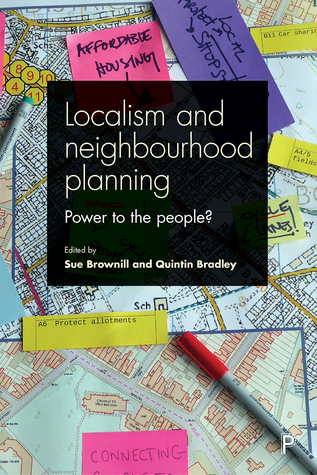
This is the first book to critically analyse this shift towards localism in planning through exploring neighbourhood planning; one of the fastest growing, most popular and most contentious contemporary planning initiatives.
Neighbourhood plan has demonstrated its general conformity with the strategic policies of the local plan and is brought into force, the policies it contains take precedence over existing non-strategic policies in the local plan for that neighbourhood, where they are in conflict.
The localism act 2011 introduced new rights and powers to allow local communities to prepare neighbourhood plans which establish general planning policies for the development and use of land in a neighbourhood.
The power to create neighbourhood plans was introduced by the localism act 2011. Hence, it is eight years since the first pioneering communities exercised.
In the localism act 2011, government allowed people in local communities to make their own decisions about the site specific plans for their own area, instead of the planning authorities. To do so, they have to write a neighbourhood development plan (neighbourhood plan or np for short) according to certain rules.
The localism act 2011 allows communities to have a say in how their local area develops and grows through preparing neighbourhood plans. We are working on a number of initiatives with local communities to help them plan for developments that meet their community’s needs.
The work undertaken was agreed with the parish council andthe ministry of housing, communities and local government (mhclg) in december 2019 as part of the national neighbourhood planning technical support programme led by locality.
The localism act 2011 has introduced a new element to the planning system for england in the form of ‘neighbourhood planning'. Neighbourhood plans, once made, form part of the statutory development plan for the area which they cover.
What is neighbourhood planning? neighbourhood planning is a key part of the government’s localism agenda. It aims to give local communities greater power to shape development by taking a more active role in the development of planning policies at a local level.
The referendum for the boxgrove neighbourhood development plan will now take place at boxgrove village hall on 6 may 2021 at the same time as the election of west sussex county councillors and the police commissioner.
Localism bill: neighbourhood plans and community right to build ref: isbn 9781409827559 pdf� 571kb� 32 pages this file may not be suitable for users of assistive technology.
Neighbourhood planning was introduced by the localism act to provide an additional way for communities to engage in the planning process and help shape.
3) binding neighbourhood plans instigated by neighbourhood groups, in partnership with local planning authorities and set within the context of a strategic plan and national policy framework, with some of the preparation costs borne by central government.
Nov 24, 2018 looking at the bigger picture, the localism act 2011 has successfully devolved planning powers to over 2300 english communities.
Following the introduction of the localism act 2011, the purpose of designating a neighbourhood area is for a neighbourhood plan to then be prepared for that area. Condover parish council is in the earliest stages of considering a neighbourhood plan, and this application seeks now to formalise the process.
The localism act 2011 introduced a new type of community planning. Communities now have the right to produce a neighbourhood plan, setting out policies on the development and use of land in a parish or neighbourhood area.
Under the terms of the new localism act, communities can now choose to produce a neighbourhood plan, which will contain policies to help shape and deliver new development in their areas. Neighbourhood plans can set out a vision for an area and should contain planning policies for the use and development of land.
Neighbourhood planning the localism act 2011 allows communities to have a say in how their local area develops and grows through preparing neighbourhood plans.
Neighbourhood planning is a process by which communities can come together and prepare plans that will guide the type of developments they wish to see in their local area. Neighbourhood planning enables parish councils and, in non-parish areas, neighbourhood forums, the opportunity to use tools such as 'neighbourhood development plans (ndp.
Independent examiner, or local planning authority, should consider the following: whether the neighbourhood plan policy supports and upholds the general principle that the strategic policy is concerned with the degree of conflict between the draft neighbourhood plan policy and the strategic policy whether the draft neighbourhood plan.
Graham haughton is professor of urban and environmental planning, university of manchester.
Jan 20, 2021 through the localism act the government is giving local communities powers to have a direct say in the future development of their.
A neighbourhood plan should be community-led and that means researched, written and voted on by the people who live in the neighbourhood – that’s you and your neighbours. This guide will help you run successful community consultation exercises.
Neighbourhood planning gives communities direct power to develop a shared vision for their neighbourhood and shape the development and growth of their local area.
The localism act 2011 introduced rights and powers to allow local communities to shape new development. Within these, communities (parish councils and neighbourhood forums) are able to develop neighbourhood development plans and under certain circumstances are able to grant neighbourhood development orders or progress development under community right to build orders.
Oct 3, 2019 of the legislation contained within the localism act 2011. What are neighbourhood plans? can a neighbourhood plan stop development from.
Preparing a neighbourhood development plan this practice note advises on the stages of neighbourhood development plan (ndp) preparation, including conforming with national and local policies, defining the neighbourhood area, engaging the community, drafting a vision and objectives and satisfying publicity and consultation requirements.
Neighbourhood planning new community plans for wirral's neighbourhoods the localism act 2011 introduced new powers for communities to have a bigger say on the planning policies that operate within.
Neighbourhood planning gives local communities the opportunity to shape development and growth in their area through the localism act 2011. Once ‘made’ (adopted), they become part of the statutory development plan for the area, and the policies and proposals contained within them used in the determination of planning applications, including appeals.
A neighbourhood plan should promote appropriate development rather than block growth. It must be in line with your local plan and the national planning policy framework so should be broadly supportive of low carbon initiatives such as renewable energy.
As one of a range of rights and powers introduced by the localism agenda of 2011, neighbourhood groups were able to draw up statutory land-use plans, thereby creating a new tier in the planning framework.
Can my community have a neighbourhood plan? neighbourhood planning is available everywhere.
Neighbourhood plan direction – helping the community to identify local issues and shape priorities. To support neighbourhood planning, the east cambs local plan (which is at an early stage of preparation as at january 2016) will: be prepared expediently to ensure an up-to-date local plan is in place;.
Neighbourhood plans • the coalition government will revolutionise the planning process by taking power away from officials and putting it into the hands of those who know most about their neighbourhood –local people themselves ’ greg clarke, minister for decentralisation, 2010 • ‘neighbourhood planning is about overcoming.
The idea is that a neighbourhood plan will eventually be adopted into the local authority planning framework following a local referendum.
A new planning system for england – the localism act the localism act (2011): abolishes the regional tier of the statutory planning system and adds a new tier – neighbourhood plans; empowers local communities to produce and have a major role in implementing their neighbourhood plan;.
Neighbourhood planning is one of the government’s flagship policies for devolving power and decision-making to local communities. The government wants communities to become more self-reliant and to take advantage of new powers that are available to them under the 2011 localism act to improve their local areas, including neighbourhood planning.
The key to this brave new world of localism is the neighbourhood development plan, which enables local communities to make planning policies for their area that.
Neighbourhood planning neighbourhood planning was introduced in the localism act 2011. It is an important and powerful tool that gives communities statutory powers to shape how their communities develop.
There are three types of neighbourhood planning documents: a neighbourhood development plan (shortened to neighbourhood plan) sets out planning policies for development and the use of land in a local area. Once adopted, a neighbourhood plan becomes part of the development plan for the area.
Neighbourhood planning giving communities the ability to shape the development and growth of their local area. The localism act (2011) and neighbourhood planning regulations (2012) provide communities with the opportunity to shape their local areas through:.
The localism act also introduced a new regime for neighbourhood planning. The bill was introduced to parliament on 13th december including proposals for neighbourhood development plans made by communities rather than local authorities, and described by politicians as a “triumph for democracy over bureaucracy.
Neighbourhood planning was introduced in the localism act 2011 and gives local people a major statutory say in helping to shape development in the areas in which they live. It empowers communities to shape the development and growth of a local area through the production of a neighbourhood plan.
Post Your Comments: