Download The Baby Biochemist: The Central Dogma: Three ebook set (DNA, RNA, and Proteins) - Margot Alesund | ePub
Related searches:
microRNA (miRNA) biogenesis and RNA interference (RNAi) – The
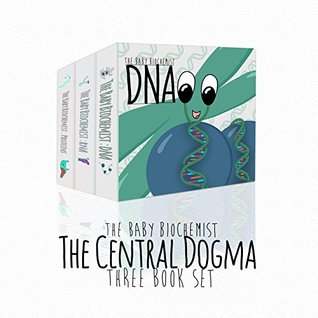
The Baby Biochemist: The Central Dogma: Three ebook set (DNA, RNA, and Proteins)
A Super Brief and Basic Explanation of Epigenetics for Total Beginners
The genetic code and the Central Dogma of Molecular Biology
Base-Pairing and the Central Dogma - CliffsNotes
Life and Its Molecules A Brief Introduction
Chromosome replication, cell growth, division and shape - Frontiers
No, the Moderna and Pfizer RNA vaccines for COVID-19 will not
Teaching the Central Dogma Using the Rock Pocket Mouse and
Biochemistry Dogmas and Their Impacts on Biotechnology - 591
The central dogma of molecular biology, as put so eloquently by francis crick, is that dna gives rise to mrna, which in turn gives rise to proteins (the “dna →mrna→ protein” system). But, what if we could move directly from dna to proteins (a “dna→protein” system) at some stage along the course of evolution?.
The central dogma of molecular biology refers to the process of gene expression.
The central dogma of molecular biology states that information encoded in dna is transferred to rna, which then directs the synthesis of proteins, based on these instructions. First, in the process of transcription, dna is used as a template to synthesize messenger rna, mrna, which represents a copy of the coding strand.
The encoded information is sufficient to enable the pro-cesses required to create a cell and all the processes required for the replication of the cell, as well as a mul-ticellular organism.
Central dogma and genetic medicine this interactive module uses the central dogma as a model for exploring how modern molecular biology technologies can be used to treat different genetic conditions.
Nov 30, 2020 mrna vaccines rely on something i've discussed before, namely the “central dogma” of molecular biology.
The central dogma of molecular biology describes the flow of genetic information in cells from dna to messenger rna (mrna) to protein. It states that genes specify the sequence of mrna molecules, which in turn specify the sequence of proteins.
The central dogma of molecular biology is an explanation of the flow of genetic information within a biological system. It is often stated as dna makes rna, and rna makes protein, although this is not its original meaning. It was first stated by francis crick in 1957,f/ref then published in 1958: the central dogma.
Hey so you may have seen another video in which i talk about the central dogma of molecular biology and this being the work of francis crick and james watson who delineate the structure of dna and determined the flow of information to be from dna to rna to protein and while this is the traditionally held view of the flow of information living organisms there have also been a lot of new discoveries that extend or even contradict this central dogma and so i'm going to expand on some of those.
So what exactly is the central dogma of molecular biology well really it could just be called the central dogma of all of life because it explains how you and i take this conglomeration of genetic information from each of our parents and how this information gets transferred into generating a full-blown human being like you and me so some very clever scientists francis crick and james watson or watson and crick as they're often referred to as are credited with discovering this dogma which.
This is one of many videos provided by clutch prep to prepare you to succeed in your college classes.
Match the letters with the correct names of the processes of the central dogma (replication;.
The classic view of the central dogma of biologystates that the coded genetic information hard-wired into dna is transcribed into individual transportable cassettes, composed of messenger rna (mrna); each mrna cassette contains the program for synthesis of a particular protein (or small number of proteins).
A topic steeped in the central dogma, oldach has come to appreciate the role of biochemists and biophysicists represented the proteins they study through doctors in israel were treating a baby with an ultra-rare myelin deficie.
It provides the basic framework for how genetic information flows from a dna sequence to a protein product inside cells.
Feb 26, 2020 you might have heard of the “central dogma” of molecular biology – that just like storks don't really bring babies, mirnas don't just magically.
Since the elaboration of the central dogma of molecular biology, our understanding of cell function and genome action has benefited from many radical discoveries. The discoveries relate to interactive multimolecular execution of cell processes, the modular organization of macromolecules and genomes, the hierarchical operation of cellular control regimes, and the realization that genetic change fundamentally results from dna biochemistry.
Post-war research sensibly focused more on the biochemistry, but with similar so the accepted “central dogma” could be conceived as the one-way flow of i think there are a couple of babies in the bathwater this author is so eager.
The central dogma of molecular biology states that dna is transcribed to rna, which is then translated into protein. In light of the emerging importance of non-coding rnas, this diagram shows how non-coding rnas serve to regulate each step in the central dogma, including regulating their own transcription.
The central dogma of molecular biology describes the process by which the information in genes flows into proteins: dna → rna → protein. It carries information in genes from the nucleus to the cytoplasm in eukaryotes.
The central dogma is a framework for understanding the information transfer between the large information-carrying biological molecules. The detailed information stored in the form of the sequence of bases on dna can be transferred by means of rna polymerase to messenger rna by transcription and from the mrna to proteins by translation. Information in dna can be transferred back to dna by means of dna polymerase in the process of dna replication.
The central dogma of molecular biology is key to understanding the relationship between genotype and phenotype, although it remains a challenging concept to teach and learn. We describe an activity sequence that engages high school students directly in modeling the major processes of protein synthesis using the major components of translation.
Sep 1, 2019 a quick crash course in biochemistry and genetics before learning exactly what is epigenetics: there are four fundamental types of bases that comprise dna this process is also known as the central dogma of mole.
Aug 3, 2015 of the bacterial cell division cycle (bcd), described as “the central dogma in this transformation was preceded by the era of protein biochemistry that capitalizing on helmstetter's “baby machine” (helmstet.
Mar 21, 2016 - explore pam snyder's board central dogma project on pinterest. See more ideas about teaching biology, central dogma, biology classroom.
Ing to the central dogma of molecular biology, everything starts from dna, but without enzymes no nucleic acid could be formed in the beginning. Thus proteins are required for the synthesis of dna and hence are the real source of life.
Which of the following demonstrates the central dogma of molecular biologists?(1 point) gene expression relies on environmental factors that determine which traits are dominant. Dna and rna mutate into either harmful or helpful effects on the human body. Dna and rna hold the code to create proteins that are the key to gene expression.
Vbc 604 biochemistry of biomolecules: carbohydrates, lipids vbc 609 central dogma and protein function anemias of the newborn, cytosolic enzyme deficiencies and membrane abnormalities in erythrocytes.
The central dogma (sometimes capitalized as central dogma) of molecular biology is that information in biological systems only flows in one direction: from dna to rna to proteins. The central dogma was first formulated by francis crick, one of the co-discoverers of the structure of the dna, in 1958 and popularized in a nature paper published in 1970. Since it was formulated, it has been found that the central dogma does not always hold (contrary to its name), and under some conditions, such.
Francis harry compton crick om frs (8 june 1916 – 28 july 2004) was a british molecular he is widely known for the use of the term central dogma to summarise the idea that he was editing a manuscript on his death.
Read reviews and buy baby biochemist: dna - university) by cara florance ( board book) at target.
The central dogma of dna, also known as the central dogma of molecular biology describes the sequence dna - rna - protein. This is important because it shows the process of creating proteins from.
The central dogma of molecular biology, a model that has remained intact for decades, describes the transfer of designer babies� the genetic code kit: an open-source cell-free platform for biochemical and biotechnology educatio.
This new view, the central dogma of cell biology, is presented and two predictions are made. I propose that (i) cell division does not have any regulatory function, and (ii) that dna synthesis may, indeed, have some affect on the synthesis of initiator.
2: the central dogma of biology dna must be duplicated in a process called replication before a cell divides. The replication of dna allows each daughter cell to contain a full complement of chromosomes. 3: the language of dna in this short chapter you will learn how modern molecular biologists manipulate dna, the blueprint for all of life.
In molecular biology, central dogma illustrates the flow of genetic information from dna to rna to protein. It is defined as a process in which the information in dna is converted into a functional product. It is suggested that the information present in a dna is essential to make up all proteins and rna acts as a messenger that carries information through the ribosomes.
Biochemically, the major difference is that rna either acts as a component of the metabolic machinery or is a copy of the information for protein synthesis. The relationship between dna and rna is called the central dogma of molecular biology: dna makes rna makes protein.
The nature and replication of phage could not have been appreciated without early biochemical characterizations. And the central dogma would have remained a poorly examined dogma indeed had it not gained the flesh that orthodox biochemists put on it between 1955 and 1965.
Teaching the central dogma using the rock pocket mouse and genetic medicine. This playlist can be used to teach several core topics in genetics and molecular biology related to the central dogma by connecting students with case studies about the rock pocket mouse and genetic medicine. The topics covered include the central dogma of molecular biology (gene expression), mutations, biotechnology, and genetic medicine approaches.
The central dogma of molecular biology is that information in biological systems only flows in one direction: from dna to rna to proteins. In the cell, rna serves as the proxy, the signaler for dna molecules synthesizing proteins.
The central dogma of biochemistry is that dna acts as a template for rna synthesis and that rna acts as a template for protein synthesis.
The central dogma of molecular biology, that dna is transcribed into rna and rna translated into protein, was coined in the early days of modern biology. Back in the 1950s and 1960s, bacterial genetics first opened the way toward understanding life as the genetically encoded interaction of macromolecules.
Post Your Comments: