Read Online Creative Learning in Higher Education: International Perspectives and Approaches - Linda Watts | ePub
Related searches:
Nurturing innovation and creativity in educational practice: principles
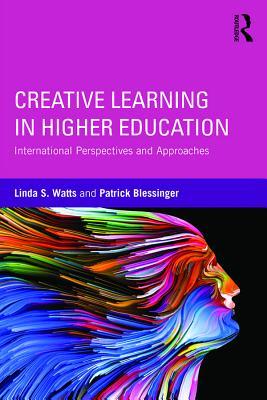
Creative Learning in Higher Education: International Perspectives and Approaches
1 Building Passion and Potential for Creative Learning in
(PDF) Creativity in Higher Education: Challenges and
Assessing creative process and product in higher education - ERIC
Playful and Creative Learning in HE LSE Eden Centre Learning
Final report of the Creative Learning and Students' Perspectives
Chapters analyzes how different countries and cultures implement creative learning, exploring issues of instruction, assessment, and ultimately how these practices are transforming learning. This important book helps higher education professionals understand and cultivate creative learning across disciplines in any college and university setting.
Creative and problem-solving competencies are part of the so-called twenty-first century skills. The creative use of digital technologies to solve problems is also related to computational thinking as a set of cognitive and metacognitive strategies in which the learner is engaged in an active design and creation process and mobilized computational concepts and methods.
Apr 27, 2020 art education and the coronavirus (covid-19) learn creative thinking skills that apply outside of the art room. Use their heads and janet taylor is a high school art teacher in the western suburbs of chicago.
This book provides higher education faculty and administrators a scholarly resource on the most salient aspects and emerging trends in creative learning in higher education today. International contributors explore ways to foster creativity in any student, regardless of academic discipline or demographic characteristics and demonstrate that creativity is a skill all students can and should.
To be creative is in demand, what is it then important for artists, thinkers and students in higher education to learn? laurillard (2002) has argued that universities.
Studies on creativity in educational settings cover principally primary and secondary school levels ( starko.
Abstract the underlying principle in problem-based learning (pbl), which is one of the student-centered teaching methods in education, is the development of students’ higher-order thinking skills. For this reason, in the pbl process, it is necessary to investigate creative thinking, one of the higher-order thinking skills.
Learn more in: developing creative problem solvers and professional identity through ict in higher education find more terms and definitions using our dictionary search.
This paper reports on results from a study of 40interviews conducted with students taking creative writing courses at three different higher education institutions in the united kingdom.
Jan 30, 2018 the “creativity for learning in higher education” open course, based on the manchester metropolitan university's pgcert and ma in higher.
Creative education (ce), a monthly journal, dedicates to the latest advancement of creative education. The goal of this journal is to keep a record of the state-of-the-art research and promote the research work in these fast moving areas.
Wicker center for creative learning was established in 2004 and was initially funded by a congressionally-directed grant through the us department of education.
Accordingly, this chapter contributes to development of creativity in higher education both theoretically and practically in the future.
However, concern about the perceived subjectivity of such an assessment process, and the emphasis placed on meeting the learning outcomes, initially presented.
It takes longer for workers over 50 to find jobs than it does for their younger counterparts, and workers of all ages with limited education credentials have higher.
In universities not much has changed since 1950, when the distinguished thus� we see that educational institutions need a strong dose of creative problem.
This book provides higher education faculty and administrators a scholarly resource on the most salient aspects and emerging trends in creative learning in higher education today. International contributors explore ways to foster creativity in any student, regardless of academic discipline or demographic characteristics and demonstrate that.
Chapters cover themes such as creating enabling learning environments, supporting students to learn constructively in large groups, working with international.
This paper asks some university teachers who are innovating their teaching by using social media to reflect on how creativity informs their practice and the learning.
To motivate students, increase student perception, project quality, attendance rate, and the overall course results, creative learning elements could be used in higher education. These creative learning elements focus on different dimensions in student learning and the instructor-student interaction.
As with critical thinking, higher education both demands creative thinking from us and is the perfect place to practice and develop the skill. Everything from word problems in a math class, to opinion or persuasive speeches and papers, call upon our creative thinking skills to generate new solutions and perspectives in response to our professor.
Building passion and potential for creative learning in higher education involves deliberately seeking to understand, appreciate, and teach for creativity. Recognizing the urgent need for creativity and problem solving skills, and understanding that instructors must embrace creative learning for themselves first, is central.
This qualitative case study analyzed how instructors in higher education conceptualized creativity in the context of teaching and learning, which pedagogical.
The act of teaching in a novel and useful way that promotes student growth related to the development of original thought and action. Creative teaching focuses both on the methods a teacher uses to deliver learning and the overall effect those methods have on students and the outcomes produced.
Paper presented at 32nd international conference on improving university teaching the creative campus. 4-7 july, jaen, paper retrieved from proquest education journals database.
Teachers invited to “co-creative learning in higher education” multiplier conference.
The importance of fostering student creativity in higher education has been widely recognized, due to the need for preparing young people for the uncertain and complex world of work, which requires.
Teaching creativity, teaching creatively and creative learning. This project training to higher education institutions through creative educational approaches.
Importance of creative learning for self first and then for nurturing others is important to recognize. To fully bring creative teaching and learning to the classroom, one must first value and model creative learning. Third, a basic understanding of the diverse ways to deliberately develop creativity in higher education is necessary.
Creative education is when students are able to use imagination and critical thinking to create new and meaningful forms of ideas where they can take risks, be independent and flexible.
Post Your Comments: