Download A Political History of Japan During the Meiji Era 1867-1912 - Walter Wallace McLaren | PDF
Related searches:
Political History of Japan During the Meiji Era, 1867-1912 - Walter
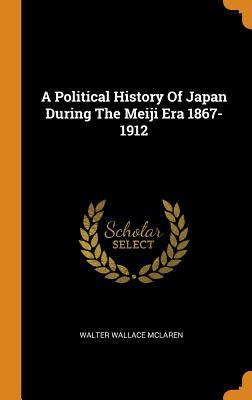
A Political History of Japan During the Meiji Era 1867-1912
A Political History Of Japan During The Meiji Era 1867-1912
A Political History of Japan During the Meiji Era - 1867-1912
A Political History Of Japan During The Meiji Era: 1867-1912 (1916
A Political History of Japan During the Meiji Era, 1867-1912
A political history of Japan during the Meiji era, 1867-1912
Political History of Japan During the Meiji Era, 1867-1912
Occupation and Reconstruction of Japan, 1945–52 - Milestones in the
Meiji political institutions (Chapter 10) - The Cambridge History of
The Meiji Restoration and Modernization Asia for Educators
Preserving Imperial Sovereignty in the Changing Political Order of
A Political History of Japan during the Meija Era, 1867-1912.
A political history of Japan during the Meiji era, 1868-1912
The History of Japan's Postwar Constitution Council on Foreign
The Shōwa Political Crisis, July 1940: The Imperial Japanese Army
Japan's Modern History: An Outline of the Period Asia for
Japan - The Yayoi period (c. 300 bce–c. 250 ce) Britannica
1450-1750: Japan: The Tokugawa Central Themes and Key
Post-Fascist Japan: Political Culture in Kamakura after the Second
The Japanese Political System - Japan Industry News
The Nara Court Under Buddhism: The Religious Side of Political
The Best Books about Japan Five Books Expert Recommendations
(PDF) A Modern History of Japan: From Tokugawa Times to the
Year 8 History Japan and the Shoguns - Good Samaritan Catholic
Japan in the 16th Century: Life, Culture & Politics Study.com
The American Occupation of Japan, 1945-1952 Asia for
The Untold History of Ramen: How Political Crisis in Japan
History of Japan, Between the Wars, 1920-36
The Rise and Fall of Taishō Democracy: Party Politics in
Japan After World War One The Non-Western World
The Empire Of Japan & The Invasion Of The Philippines In WW2
A Brief Look at the History of the Yakuza - Japan Powered
Japan's unique culture developed rapidly during the heian era (794-1185). The imperial court turned out enduring art, poetry, and prose. Samurai lords, called shogun, took over the government in 1185, and ruled japan in the name of the emperor until 1868.
World history and geography in the 1930s, ultranationalist groups took control of japan, restricted freedoms, and renewed drives to democracy grew as political parties grew stronger, exerted their power in the diet, and extended.
Japan's first visitor from england, william adams was a pilot on the liefde, a dutch vessel that shipwrecked off southern japan. The only one of 24 survivors coherent enough to greet the japanese.
The rise of japan to a world power during the past 80 years is the greatest miracle in world history. The mighty empires of antiquity, the major political institutions of the middle ages and the early modern era, the spanish empire, the british empire, all needed centuries to achieve their full strength.
Buy a political history of japan during the meiji era: 1867-1912 (1916) by mclaren, walter wallace (isbn: 9780548771723) from amazon's book store.
When examining political thought in post-1945 japan, we must acknowledge in the postwar era, the imperative of gaining control over the making of history.
By the end of the meiji period (1868-1912), japan was a considerable power in asia. And following its participation during the short taisho period (1912-1926) in the first world war, under the anglo-japanese alliance of 1902, it was recognized as one of the world's great powers. But following the world war and the russian revolution, the world was undergoing great turmoil.
This talk will place these three projects within the broader historical and cosmological climate of eighth-century japan.
A political history of japan during the meiji era, 1868-1912 by mclaren, walter wallace, 1877-publication date [1916] topics.
For over 260 years, japan experienced political stability, peace, and rising prosperity. Ieyasu established his capital in edo (renamed tōkyō in 1868), which commanded the kantō region and was distant from the imperial court in kyōto.
“what hein provides for us is a nuanced intellectual history of a part of japan that had and still has a clear sense of its own identity.
The goals of the early leaders of the meiji era were ambitious, as they established new economic, political, and social institutions that governed japan through.
Political history of japan during the meiji era, 1867-1912 walter wallace mclaren.
A political history of japan during the meiji era 1867-1912 [mclaren, walter wallace] on amazon.
Discuss - what makes a country a leading world power? brainstorm all the ways in which a country could be considered a world power.
Political history of japan during the meiji era, 1867-1912 walter wallace mclaren limited preview - 2013.
During the 1930s, japan began a campaign of imperial expansion in the western pacific. They wanted to gain power over their neighbors and also to oust american and european influences from the region. Early in 1941, the western powers were beginning to pay attention to the situation.
A political history of japan during the meiji era, 1867-1912 - walter wallace mclaren - google books.
This article examines a criminally understudied moment in modern japanese military and political history.
Foreign relations” has been retired and is no beginning in 1950, scap deemed the political and economic future of japan.
Alone among non-western peoples, the japanese maintained full political independence during the golden age of imperialism. More than that, as the twentieth century opened, japan was experiencing the industrial revolution and advancing to the status of a great power, a full (if unwelcome) participant in the struggle for imperial position.
Japan experienced the deepest economic downturn in modern history during 1930-32. In the 1930s, political and intellectual thinking gradually shifted from.
Buddhism came to japan during the asuka period, 538-710, as did the chinese writing system. The first strong central government developed during the nara period (710-794). The aristocratic class practiced buddhism and chinese calligraphy, while agricultural villagers followed shintoism.
A modern history of japan: from tokugawa times to the present. A modern history of japan: from tokugawa times to the present.
May 6, 2019 few nations on earth have had a more colorful history than japan, a country known for its unique culture, people, and land.
During the meiji period, which ended with the emperor’s death in 1912, the country experienced significant social, political and economic change–including the abolition of the feudal system.
Title: a political history of japan during the meiji era 1867-1912.
Classical japan is a period when the yamato clan rose to power and became japan's first dynasty.
Modern japanese history can be divided into four periods: 1600-1868: the period of the tokugawa shôguns; feudal political order with economic and social change occurring in a gradual manner. This period saw growing urbanization, the spread of popular education and the rise of the merchant class.
We'll examine the historical, political, and religious life of the warrior.
1450-1750: japan: the tokugawa central themes and key points asia for educators columbia university. Japan in the 1500s is locked in a century of decentralized power and incessant warfare among competing feudal lords, a period known as the sengoku, or country at war (1467-1573). These are the final years of japan's medieval period (1185-1600) just prior to the reunification of japan and the establishment of order and peace under the tokugawa shoguns (1600-1868).
Read free modern japan a social and political history nissan institute routledge japanese studies on the effects of global standardization, and on much more.
The reign of the emperor under whom modernisation of japan had begun in 1868 was known as meiji, meaning “enlightened government”. Emperor hirohito took the title of showa for his reign, which means “enlightened peace”.
The constitution's social reforms were transformative, designing a new role for the japanese imperial family, placing the nation's military firmly under civilian.
Abolition of feudalism; constitutional movement; the emergence of imperial japan. The sino-japanese war; the russo-japanese war; japanese expansionism; constitutional government; social change; the rise of the militarists.
The yamato clan: from the 4th century ad: the first clear political structure to emerge in japan is based on large independent clans (or uji) with powerful leaders. By the 4th century the clan occupying the yamato plain (the region now known as nara, south of osaka) establishes sufficient ascendancy for its chieftain to be seen as emperor.
Political control of japan's government ultimately comes down to the diet and how its members are allocated among party affiliations.
The first self-described anarchist in east asia was the japanese writer and activist kotoku shusui. In 1901 kotoku, an early advocate of japanese socialism, helped to found the social democratic party, which was immediately banned by the government.
When the meiji emperor was restored as head of japan in 1868, the nation was to adopt western political, social, and economic institutions in so short a time. This phenomenon is one of the major characteristics of japan's mode.
For a short book that gives a very insightful history of japan we highly recommend inventing japan by ian buruma.
Feb 22, 2021 kitaoka shinichi, a diplomatic historian and policy advisor who currently serves as the president of the japan international cooperation agency.
A political history of japan during the meiji era - 1867-1912 book.
The politics of japan are conducted in a framework of a multi-party bicameral parliamentary representative democratic constitutional monarchy in which the emperor is the head of state and the prime minister is the head of government and the head of the cabinet, which directs the executive branch.
The age of reform (552–710) the idealized government of prince shōtoku.
During his regency, which lasts until 622, the prince institutes a number of important political and social reforms meant to centralize government control and strengthen imperial authority. A devout buddhist, shōtoku passes an edict promoting the buddhist faith and gives imperial support to the construction of several important temples.
During these years japan's expansionist tendencies become mainly evident in relation to korea, its nearest neighbour and a rich source of iron and coal. But it is, by long tradition, a ' tributary kingdom ' of china.
Bria 9 2 b ruling in the name of the emperor: how japan became a world power. In the japan's first national political parties were formed, and some of them opposed the japan: a brief history of japan from the columbia encyclo.
Geographically located in the asia-pacific region, japan shares a historical and cultural heritage with its neighbors and enjoys close political and economic.
Jul 21, 2017 from his private chambers (in) in a buddhist monastery, shirakawa conducted politics (sei) and ruled behind the scenes for over four decades.
In the nineteenth century, japan experiences a dramatic shift from the conservative, isolationist policies of the shōgun-dominated. To the rapid and widespread drive to modernize and engage with the rest of the world that characterizes the meiji restoration. During the first half of the century, decades of fiscal and social disruption caused by the growth of a market economy and a complex monetary system in a country that is still officially based on agriculture, which.
Japan - japan - political developments: the ldp continued its dominance of japanese politics until 1993. Its success in steering japan through the difficult years of the opec oil crisis and the economic transition that substituted high-technology enterprises for smokestack industries in the 1970s and ’80s, thereby restoring japan’s international economic confidence, was not lost on the japanese public.
The yamato clan: from the 4th century ad the first clear political structure to emerge in japan is based on large independent clans (or uji) with powerful leaders. By the 4th century the clan occupying the yamato plain (the region now known as nara, south of osaka) establishes sufficient ascendancy for its chieftain to be seen as emperor.
Japan's first visitor from england, william adams was a pilot on the liefde, a dutch to maintain political stability, ieyasu issued the christian expulsion edict published posthumously in 1727, kaempfer's history of japan.
Jan 19, 2021 according to ancient chinese records, japan was a land of scattered tribes during the yayoi period.
Power and class in japan, 500 to 1336 power to the nakatomi family japan's failed reforms in the 700s japan's emperors become figureheads: the 800s ce the fujiwara era, 858 to 1160 – wars among nobles and their samurai arrival of the kamakura shogunate, 1156-1185 rule of law and class privileges in kamakura japan mongol invasions and the end of kamakura rule in 1333.
The japanese people constitute the overwhelming majority of the population. They are ethnically closely akin to the other peoples of eastern asia. During the edo (tokugawa) period (1603–1867), there was a social division of the populace into four classes—warrior, farmer, craftsman, and merchant—with a peer class above and an outcast class below. With the exception of the burakumin (literally, “people of the hamlet”), the descendants of the former outcast class, this social class.
This thoroughly revised and updated third edition of modern japan provides a concise and fascinating introduction to the social, cultural and political history of modern japan. Ranging from the tokugawa period to the present day, tipton links everyday lives with major historical developments, charting the country’s evolution into a modernized, economic and political world power.
Japan entered a new era of politics in the twentieth century in two senses. The first was that older leaders from the time of the meiji restoration passed on the torch to a new generation.
During the occupation, japan adopted a new constitution (sometimes called the macarthur constitution because of the major role americans played in its drafting). This constitution was completely different from the meiji constitution of 1889.
In the nineteenth century, japan experiences a dramatic shift from the conservative, isolationist policies of the shōgun-dominated. To the rapid and widespread drive to modernize and engage with the rest of the world that characterizes the meiji restoration. During the first half of the century, decades of fiscal and social disruption caused by the growth of a market economy and a complex monetary system in a country that is still officially based on agriculture, which supports.
Enactment of the new (democratic) constitution transforms japan's political life, making it a truly parliamentary state. With a peace treaty signed in 1951, japan regains its independence. The late 1950s to the early 1970s is called the high growth age in japan because of the booming economy.
Women and political life in meiji japan: the case of the okayama joshi konshinkai (okayama.
Sep 17, 2009 (see the general history article for a more detailed look at shinto's coexistence from then on, japanese political, social, military and religious.
The twentieth century is a turbulent time in japan, as the country vacillates between unprecedented heights of power and wealth and the depths of poverty and devastation. After the dramatic efforts to modernize politically, socially, economically, and culturally during the meiji restoration, japan seeks to win control over neighboring countries, competing with western imperialist ambitions.
During the 1960s, the government grew tired of the gang warfare and cracked down. The effort led to the disbanding of many high-end gangs and forced the yakuza to move away from gambling and other crimes. They turned toward corporate blackmail, protection rackets, political intelligence, real estate, and stock trading.
As the center of politics and culture in japan, edo grew into a huge city with a population of over a million by the mid-eighteenth century.
Post Your Comments: