Full Download Eighteenth-Century Dissent and Cambridge Platonism: Reconceiving the Philosophy of Religion - Louise Hickman file in PDF
Related searches:
Poetry in the 20th Century and Today HowStuffWorks
Eighteenth-Century Dissent and Cambridge Platonism: Reconceiving the Philosophy of Religion
The Enlightenment and religion - OAPEN
History and Narrative Identity: Religious Dissent and the
Enlightenment and Dissent 17 (1998) - The Queen Mary Centre
(PDF) DRESS FOR DEFERENCE AND DISSENT: HATS AND THE DECLINE
The First Bohemians: dissent, disorder and debauchery in 18th
New England Dissent, 1630–1833: The Baptists and the Separation
Introduction: Religious Dissent and Textual Culture in the
Publius Part One: The Culture of Classicism and Classical
A Note on Protestant Dissent and the Dissenters
Wesley and the Wesleyans: Religion in Eighteenth-Century
Cancer in the Sixteenth to Eighteenth Centuries American Cancer Society
The 20th Century
The Twentieth-Century House - Bob Vila
Cancer in the Nineteenth Century American Cancer Society
Inventions of the 19th Century
Eighteenth Century Dissent and Cambridge Platonism
Routledge Studies in the Philosophy of Religion: Eighteenth
Enlightenment and Religion: Rational Dissent in Eighteenth
Eighteenth-Century Dissent and Cambridge Platonism - Louise
Home The Eighteenth Century
Enlightenment and Religion: Rational Dissent in - ProQuest Search
Enlightened Dissent: The Voices of Anti-Imperialism in Eighteenth
Enlightenment and Religion: Rational Dissent in Eighteenth-Century
'New Light' thinking and non-subscription amongst Protestant
The Oxford History of Protestant Dissenting - Reading Religion
Eighteenth-Century Dissent and Cambridge Platonism - IBS
Rescuing the Eighteenth-Century Church of England from the
Eighteenth-Century Dissent and Cambridge Platonism by Louise
Enlightenment and religion : rational dissent in eighteenth
§1. The Historical Evolution of Dissent reflected in its
Religion, Politics and Dissent, 1660–1832: Essays in Honour
The Eighteenth-Century Condition
Church and State in British North America, Divining America
America as a Religious Refuge: The Seventeenth Century, Part 1
RATIONAL DISSENT, ENLIGHTENMENT, AND ABOLITION
Religion, Politics and Dissent, 1660–1832 on Apple Books
Protestantism in England in the 19th century - Musée protestant
The depiction of religion in eighteenth-century English literature fro
Eighteenth-Century Dissent and Cambridge Platonism (Routledge
Wales - Politics and religion, 1640–1800 Britannica
The Oxford History of Protestant Dissenting Traditions
XVI. The Literature of Dissent: Bibliography. Vol. 10. The
Cosmopolitanism, dissent, and translation - BUP - Bononia
Historical Essays: The Eighteenth-Century Child
Joseph Priestley and Dissent - Wikipedia
The Thought of Philip Doddridge in the Context of Early
English Rational Dissent and Philanthropy, c.1760–c.1810
(PDF) History and Narrative Identity: Religious Dissent and
From Natural Law to Natural Rights? Protestant Dissent and
Religious dissent and tempered dissidence: Community and
Protestant Dissent and Philanthropy in Britain, 1660-1914
Shaving and Masculinity in Eighteenth-Century Britain
Equally, they contribute to the current debate over eighteenth-century religion and its social, political and intellectual meaning, focussing on the irish and scottish contributions to english.
48 this was the kind of position adopted by dissenting reformers in the last quarter of the eighteenth century. It was voiced most notoriously in richard price's sermon commemorating and criticizing 1688, a discourse on the love of our country (london, 1790).
These interdisciplinary essays provide a fresh analysis of rational dissent within english enlightenment culture from a variety of viewpoints.
Equally, they contribute to the debate over eighteenth-century religion and its social, political and intellectual meaning, focusing on the irish and scottish contributions to english dissent. Its wide perspective and research make enlightenment and religion an important and original contribution to eighteenth-century studies.
The dissenters were those english protestants who refused to conform to the by the early eighteenth century, there were ominous signs that dissenters were.
The earliest dissenting groups, firmly established by the late 17th century, were them from the wave of 'new dissent' which followed in the mid 18th century.
The 19th century saw the birth of scientific oncology with use of the modern microscope in studying diseased tissues. Learn more about advances in the understanding of cancer and its treatment here.
These interdisciplinary essays provide a fresh analysis of rational dissent within english enlightenment culture from a variety of viewpoints. Its wide perspective and new research make this text an important and original contribution to eighteenth-century studies.
Start by marking “ enlightenment and religion: rational dissent in eighteenth-century britain” as want.
Methodism and dissent were not the only influences at work in 18th-century wales. The resilience of a native culture no longer able to depend upon traditional sources of patronage showed itself in a patriotic fervour to preserve a cultural heritage threatened by progressive anglicization.
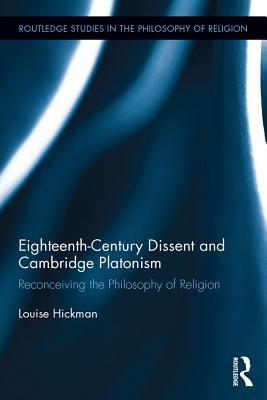
Eighteenth-century dissent and cambridge platonism identifies an ethically and politically engaged philosophy of religion in eighteenth century rational dissent, particularly in the work of richard price (1723-1791), and in the radical thought of mary wollstonecraft. It traces their ethico-political account of reason, natural theology and human freedom back to seventeenth century cambridge.
The eighteenth century: theory and interpretation fosters theoretical and interpretive research on all aspects of western culture from 1660 to 1830. The editors take special interest in essays that apply innovative contemporary methodologies to the study of eighteenth-century literature, history, science, fine arts, and popular culture.
The oxford history of protestant dissenting traditions includes contributions written by world-leading experts on the history of protestant dissent in the long eighteenth century examines the religious histories of britain, the british empire, and the united states.
Eighteenth century dissent and cambridge platonism: reconceiving the philosophy of religion.
To be a dissenter in eighteenth-century england was to challenge the legitimacy of the current regime within both church and state. It was, then, an active and oppositional commitment—one in which remembering, renewing, and reinforcing an identity with the actions and principles of their forebears played a significant part.
Eighteenth-century politics: 1690 to 1714—revolution settlement. To many protestants the articles of limerick (3 october 1691) conceded too much and left open the possibility of future catholic, indeed jacobite, resurgence. The initial determination of william iii's government to honor what had been agreed at limerick saw protestant anxiety turn into political resentment.
In the early eighteenth century scottish universities played a crucial role in the education of dissenters in both england and ireland,.
I think i've found the biggest gap in the secondary literature of all time.
The long eighteenth century was a period in which dissenters slowly moved from a position of being a persecuted minority to achieving a degree of acceptance and, eventually, full political rights. The first part of the volume considers the history of various dissenting traditions inside england.
The repeal of the test and corporation acts ¾ bookend this examination of protestant dissenting traditions in the 18th century.
Eighteenth century rational dissenter early nineteenth century constitutional reform religious toleration these keywords were added by machine and not by the authors. This process is experimental and the keywords may be updated as the learning algorithm improves.
Despite those measures, dissenters endured discrimination and financial penalties well into the eighteenth century.
The idea of the long eighteenth century (1660-1832) as a period in which religious and political dissent were regarded as antecedents of the enlightenment has recently been advanced by several scholars. The purpose of this collection is further to explore these connections between religious and political dissent in enlightenment britain.
the idea of the long eighteenth century (1660-1832) as a period in which religious and political dissent were regarded as antecedents of the enlightenment has recently been advanced by several scholars. The purpose of this collection is further to explore these connections between religious and poli.
It explains the legal situation of protestant dissent in the eighteenth century, identifies some difficulties associated with ‘dissent’ as a label, and sets out the particular intellectual and educational emphases of the group at the centre of this book.
In france, more so as the mid eighteenth century approached, the struggle of dissenting catholics (jansenists) against the ortho- dox catholic church and state.
Its wide perspective and new research make enlightenment and religion an important and original contribution to eighteenth-century studies.
Because many people were familiar with the ancient world and the figures who governed it, seventeenth and eighteenth century writers began to use classical pseudonyms and imagery. Ancient pseudonyms could stand on their own as an argument within themselves.
Di patrick leech in the eighteenth century, britain and france experienced a veritable explosion of radical ideas and texts. The production of these ideas and texts took place in increasingly cosmopolitan frameworks, both european and later atlantic, and translation played a paramount role in their exchange and dissemination.
The hampton court conference and the king james bible in early eighteenth-century dissenting histories, reformation 16 (2011): 113-143.
The eighteenth century was a period in which facial hair fell dramatically from favour. In this chapter, withey provides a fascinating new study of the practice and importance of shaving in the eighteenth century.
Eighteenth century dissent and cambridge platonism: reconceiving the philosophy of religion. This short volume is ambitious: it aims to offer both a clear and accurate account of a little known slice of the history of philosophy, and an argument for revising the way analytic philosophers conceive of philosophy of religion.
1 of a history of the english people in the nineteenth century� 410f. ] the power to fill vicarages belonged to various persons as property rights; only a minority of clergy could be placed by the bishops.
The eighteenth century saw the opening of the first toy stores in london, and their shelves were stocked with “rational amusements”—child-sized microscopes and gardening tools, for instance. Children’s books often portrayed their protagonists engaged in improving and educational games.
Eighteenth-century dissent and cambridge platonism identifies an ethically and politically engaged philosophy of religion in eighteenth century rational dissent, particularly in the work of richard price (1723-1791), and in the radical thought of mary wollstonecraft. It traces their ethico-political account of reason, natural theology and human freedom back to seventeenth century cambridge platonism and thereby shows how popular histories of the philosophy of religion in modernity have been.
Travel + leisure is a one-stop resource for sophisticated travelers who crave travel tips, news and information about the most exciting destinations in the world.
The lightbulb, the telephone, and the sewing machine were all invented during the second industrial revolution helped to define 19th-century america. Civil war was a historic event of such magnitude that it forever changed the way americans.
This article explores the relationship between philanthropy and education in the context of eighteenth-century protestant dissent. More particularly, it examines the intersection between philanthropy, fund-raising and educational administration as they evolved within the institutional lifecycle of the collegiate dissenting academies.
Explores the use of hats in seventeenth and eighteenth-century england for the expression of either deference or dissent. Changing manners of meeting and greeting testified to slow social changes.
A critical history of free thought (bampton lecture), 1862; and also in general authorities such as abbey and overton, the english church in the eighteenth century, 2 vols. As the dissenting contribution to this controversy constitutes the chief claim of dissent to purely literary notice, a list is appended here of the chief works by nonconformist writers:.
They included the xviith century dissenters� the congregationalists, (also called the baptists, the presbyterians, the quakers, and the 18th century dissenters:.
Its celtic fringe—wales, ireland, and scotland—had been barely assimilated. The vast majority of welsh men and women could neither speak nor understand the english language.
By 1729 political, economic and religious struggles both within ireland and between english.
Enlightenment and religion: rational dissent in eighteenth-century britain.
Dissent was converted to the principle only by itself passing under the fiery sword; and, when, in the eighteenth century, it became the mouthpiece of the demand for toleration, it was such merely as asserting for itself a principle, and claiming for itself the protection and benefit of that principle, which was in the air, and which grew organically with the self-consciousness of the nation.
During the renaissance, beginning in the 15th century, scientists developed greater understanding of the human body. Learn about the advances in the understanding of cancer and its treatment here.
Jan 1, 2013 thomas taylor's dissent from some 18th-century views on platonic philosophy: the ethical and theological context.
As a religious refuge: the seventeenth century religion in eighteenth- century groups who controlled political power punished dissenters in their midst.
Dec 19, 2014 'it's an extraordinary fact', gatrell writes, 'that by far the majority of 18th century painters and engravers, as well as most noted writers, poets,.
Louise hickman, eighteenth century dissent and cambridge platonism: reconceiving the philosophy of religion, routledge, 2017, 211pp. This short volume is ambitious: it aims to offer both a clear and accurate account of a little known slice of the history of philosophy, and an argument for revising the way analytic philosophers conceive of philosophy of religion.
Since rational dissent was to a large extent a religion of the commercial classes, this article also sheds light on the hotly debated relationship between capitalism and abolition. Rational dissenters were among the leading advocates for religious and political reform in late eighteenth-century britain and, while not numerically large, they.
Eighteenth-century dissenters, such as methodists, baptists, and quakers? fine. Catholic emancipation at the turn of the nineteenth century, followed by the oxford movement?.
History and narrative identity: religious dissent and the politics of memory in eighteenth-century england (2005).
Similarly, the concept of a 'confessional state' in eighteenth-century england is brushed aside too lightly, especially as dissenting grievances under the hanoverian regime and the fear of the church hierarchy that wesley was leading his followers towards dissent are correctly highlighted.
Indeed, one is struck by the profoundly different situation of dissent at the beginning of the long eighteenth century when protestant dissent was created by the expulsion of presbyterian anglicans from the established church and suffered severe if fitful persecution until the revolution of 1688–1689, and the end of the period when significant steps were taken toward the emancipation of dissent from its second class status, and when even heterodox dissent had taken several steps toward.
The dissertation proceeds from the underappreciated fact that during the late eighteenth century the publishing industry and culture of letters outside samuel johnson's circle were dominated by dissenters from the church of england.
Slowly but surely, however, these new england dissenters operating within the changing climate of the eighteenth-century enlightenment and the american.
Rational dissent, enlightenment and abolition of the british slave trade a page.
Enlightenment and religion: rational dissent in eighteenth-century britain available to buy online at takealot.
Abstract: this dissertation explores and analyzes anti-imperial sentiments in britain throughout the long eighteenth century.
Joseph priestley (13 march 1733 ( old style) – 8 february 1804) was a british natural philosopher, political theorist, clergyman, theologian, and educator. He was one of the most influential dissenters of the late 18th-century.
Anti-newtonianism and eighteenth-century dissent, kevin knox, 126-53 the mystery of count cagliostro: alchemy, prophecy, and the end of the enlightenment, iain mccalman, 154-71 ‘through the glass of history’: some reflections on historical knowledge in the thought of joseph priestley, martin fitzpatrick, 172-209.
Post Your Comments: