Read Culture and Tactics: Gramsci, Race, and the Politics of Practice - Robert F. Carley | ePub
Related searches:
Cultural Composition: Stuart Hall on Ethnicity and the - JSTOR
Culture and Tactics: Gramsci, Race, and the Politics of Practice
Culture & Tactics: Gramsci, Race, and The Politics of
Gramsci and Us: Toward Gramscian Strategy in the Neoliberal
The Critique of Domination and the Critique of Freedom: A
(PDF) Rethinking Critical Pedagogy and the Gramscian and
Cultural hegemony, language, and the politics of forgetting
Cultural Marxism, Antonio Gramsci, and The Frankfurt School
Gramsci and the German Crisis, 1929-34 by - White Rose eTheses
Antonio Gramsci and 'cancel culture' in America - The
Cultural Theory and Popular Culture by John Storey - The Flame By
Cultural Marxism and Its Conspirators The American
Fanon and the Theory of Race – Unity & Struggle
Critical Race Theory, the New Intolerance, and Its Grip on
15 Ways to Improve Diversity and Inclusion in the Workplace
CULTURAL MARXISM? AND OBAMA SAYS Money: Retirement: The
Political Elites and the Culture of Social Movements - Irons
Gramsci And Class University Of Wollongong
Hegemony and Democracy in Gramsci's Prison - eScholarship.org
IGSN 6 - Gramsci Rush: Limbaugh on the Culture War
Culture and Tactics - SUNY Press
jeffrey masko, Review of Culture and Tactics: Gramsci, Race
Tactics and Practice - SUNY Press
The History of Cultural Marxism – Thuletide
Why We Need Stuart Hall's Imaginative Left The New Republic
Gramsci's Grand Plan - The New American
13.7 Cultural Imperialism – Understanding Media and Culture
How American Racism Influenced Hitler The New Yorker
Antonio Gramsci, Cultural Marxism, Wokeness, and Leninism 4.0
(PDF) Stuart Hall on Race and Racism: Cultural Studies and
The War on America - The American Mind
Gramsci and hegemony Understanding power for social change
Duke University Press - Selected Writings on Race and Difference
Stuart Hall on Gramsci – does it help us to understand the
Culture, Bias, and Understanding: We Can Do Better Journal
Higher Education: Critical Theory Attacks America’s Norms and
The Long March Through the Institutions – Douglas Murray’s
On Cultural Hegemony, Cultural Appropriation, and Blackness
Gramsci, left populism and class struggle • International
Tactics of the Left FAR LEFT FACTS
(PDF) Stuart Hall: articulations of race, class and identity
Foucault, Gramsci and Critical Theory – Remarks on their
Section 1. Understanding Culture and Diversity in Building
Stuart Hall, Lynne Segal and Peter - Radical Philosophy
Hegemony – Literary Theory and Criticism
The 5th Anniversary Celebration of America Out Loud!
Mark winter looks back at stuart hall's article gramsci and us, first published in 1988, and finds a piece that we can usefully use to understand the current period first things first: stuart hall is a tremendous writer.
Sep 13, 2020 like marx, gramsci wrote that christianity was a primary enemy of the communist revolution and the major pillar of the alleged cultural hegemony.
Base (or, applying gramsci's work, that cultures of race, age, gender and sexuality are be done? (1902), two tactics of social democracy (1905), the state.
Culture includes the behaviors, traditions, rituals, attributes, and the meanings of a group. 3 race theoretically refers to genetic heritage, but in practice is often based on phenotypic traits and, in the united states, on the “one drop [of black blood] rule” (ref.
Apr 5, 2015 antonio gramsci, the italian communist leader and intellectual who nature of capitalism, race, gender, culture, and nation. And tactics,” “spectacular events” and not “their long-term consequences” (socialist regis.
Culture matters is a cross-cultural training workbook developed by the peace corps to help new volunteers acquire the knowledge and skills to work successfully and respectfully in other cultures. Org is a website with a set of strategic practices that health departments can apply to more meaningfully and comprehensively.
Gramsci's concept of cultural hegemony is pertinent in the modern day not although similar marketing tactics have been employed in the united states,.
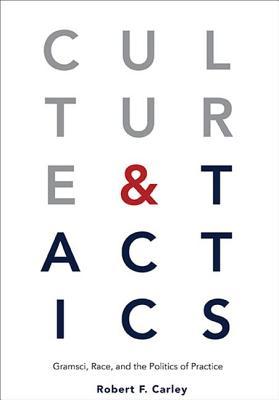
Offers both a substantive set of theoretical perspectives on tactics as a practice (in the framework of political subjectivity, organizational structures, ideology, and collective memory) and an interpretation of gramsci as a theorist of race, articu-.
Although pete entered the race championing alternative thinking — his early ideas of “generational justice” included abolishing the electoral college, restructuring the supreme court, and medicare for all — somewhere along the campaign, he sold his campaign to the bourgeoisie and embraced everything gramsci warned against.
The entire social and cultural system is a bourgeois attempt to preserve and justify its own dominance. Marxist theorists like the italian antonio gramsci argued that this bourgeois cultural hegemony was a massive impediment to revolution. Comparing the problem to that of trench warfare in the first world war in his prison notebooks, he said that.
Gramsci is best known for his theory of cultural hegemony, which describes how the state and ruling capitalist class – the bourgeoisie – use cultural institutions to maintain power in capitalist societies. The bourgeoisie, in gramsci's view, develops a hegemonic culture using ideology rather than violence, economic force, or coercion.
Gramsci’s strategy was, in effect, that of the trojan horse. “socialism will triumph,” he wrote, “by first capturing the culture via infiltration of schools, universities, churches and the media by transforming the consciousness of society. ” this trojan horse approach is called “ cultural marxism.
That mondolfo's approach to marxism entered into his own culture at this early period is opinion between bordiga and gramsci was still essentially tactical— although of being a despised race, thus giving the african continent.
Oct 14, 2020 article revisits the contributions of antonio gramsci and paulo freire to criti- education are constructed in and through people's linguistic, cultural, social, construction of race, class, and gender are impl.
Third, i discuss rhetorical and cultural studies' uptake of gramsci and the problematic truth produces hierarchical and disenfranchising racial, gendered, and other strategies and tactics specifically aimed at challenging capi.
It may (or may not) surprise you to hear that the communists of the ussr — trotsky, lenin, stalin, and friends — were strongly outspoken against the evils of “racism. ” you may also be aware of the fact that the term “racism” was popularized by these bolsheviks.
Race, religion, sexual orientation, physical conditions, cultural background or� country of origin. When it comes to supporting diversity and inclusion in the workplace, don’t play favorites, practice basic courtesy, and pay special attention to how you can embrace non-discriminatory practices and policies.
Hegemony, initially a term referring to the dominance of one state within a confederation, is now generally understood to mean domination by consent. This broader meaning was coined and popularized in the 1930s by italian marxist antonio gramsci, who investigated why the ruling class was so successful in promoting its own interests in society.
Sep 27, 2017 a pioneer of cultural studies, hall showed a generation how to meld identity and marxism. Book on race and policing, and helped found the new left review.
Rooted in a highly original analysis of the tactically mediated relationship between race and mobilization in the work of italian philosopher and revolutionary antonio gramsci, culture and tactics demonstrates how tactics impact the organizational structures of social movements and expand the affinities of political communities.
It has no idea about the cultural diversification that has taken place in britain, of how important cultural politics and identity questions have become to the politics of race. It has no sense of the infiltration of black street culture into mainstream british popular culture, or of the transformation of popular language by the black vernacular.
”3 critical race theory shares these goals with both critical theory and critical legal theory (or critical legal studies).
The idea is that cultural marxists seek to pave the way for revolution by destabilising and damaging traditional cultural values, attachments and solidarities, taking what antonio gramsci called the ‘long march through the institutions’, particularly those in the realms of culture and media.
All of gramsci’s most innovative ideas -- for example, that dominant and subordinate groups based on race, ethnicity, and gender are engaged in struggles over power; that the personal is political; and that all knowledge and morality are social constructions -- are assumptions and presuppositions at the very center of today’s politics.
Jenny irons is a sociologist broadly interested in the dynamics of race in the realms of politics and culture; specifically, she focuses on the relationship of race, social movements, and meaning. She has a book forthcoming with vanderbilt university press entitled, reconstituting whiteness: the mississippi state sovereignty commission�.
Moreover, cultural marxism emphasized culture as the main cause for inequality stemming from race, religion, sex, and everything in between. In order to implement this new direction in marxism, gramsci and lukacs began what they termed the “long march throughout the institutions.
Just as pro- lifers have schooled themselves in the aggressively non-violent tactics honed in the 60s and 70s by left-liberal demonstrators for civil rights,.
Element of race, a subordinate element in traditional nationalist ideology, now gramsci's notes between the cultural and political forms of intellectual activity.
Stuart hall's work on race cannot be separated from his work in cultural studies, and in particular, from his commitment to a radical contextualism.
Critical race theory is an offshoot of critical theory, as is its brethren in law school, critical legal theory. That was gramsci’s theory of “cultural hegemony,” and horkheimer’s.
Abstract in culture and tactics: gramsci, race, and the politics of practice, robert carley brings a wide array of theoretical and empirical study to make the claim that antonio gramsci was a critical race theorist, that stuart hall’s important theoretical contributions like articulation are necessarily marxist to bring structure and agency, long opposite ends of the sociological spectrum together in dialectical terms, for one to build a foundation for his original theories.
Cultural theory and popular culture: a reader2 (2009),210--216.
Never has there been a more challenging time in america’s history. Americans have given up on the mainstream media and the social media oligarchs and are in search of the next generation of media outlets.
Gramsci’s theories of cultural resistance can be glimpsed in the practice of mahatma gandhi’s invocation of satyagraha and indian tradition to resist british colonial ism, and, more recently, in the culture heavy tactics of the rebel zapatista army in mexico and the magical realist communiques of their subcommandante marcos.
19 cultural studies and the politics of internationalization: an interview with stuart hall by kuan-hsing chen 393 part v diasporic questions: ‘race’, ethnicity and identity 20 gramsci’s relevance for the study of race and ethnicity stuart hall 411 21 new ethnicities stuart hall 442 22 de margin and de centre isaac julien and kobena.
Gramsci's critique of the dominant mode of culture and media would be taken up by the frankfurt school and british cultural studies providing many valuable tools.
Each time the question of language surfaces, in one way to another, it means that a series of other problems are coming to the fore; the formation and enlargement of the managing class, the need to establish more intimate and secure relationships between the governing groups and the national-popular mass, in other words to reorganize cultural hegemony.
The centre for contemporary cultural studies (cccs) was a research centre at the university of birmingham, england. It was founded in 1964 by stuart hall and richard hoggart, its first director. From 1964 to 2002, the centre played a critical role in developing the field of cultural studies.
Critical race theory, intellectual movement and framework of legal analysis based on the premise that race is a socially constructed category that is used to oppress and exploit people of color. Critical race theorists hold that the law and legal institutions in the united states are inherently racist.
Gramsci, who is often seen by marx scholars as the theoretician of the ‘historical compromise’. Likewise, foucault is regarded as incompatible with their concern to reformulate and to restore marx’ theory. For those refer to both marx and gramsci, foucault is often seen as an unwitting or even.
Mar 31, 2018 gramsci was a tactical intellectual who presented marxist theory with a broad and new venue to exploit its social-political ideology of power.
Gramsci’s prison notebooks, along with his letters and pre-prison writings, have had an astonishing cultural and political impact, influencing a wide range of intellectual fields and inspiring political parties and social movements.
Gramsci tend to present his prison notebooks as a sharp break with lenin's ideas whole human race historically unified in a single unitary cultural system gramsci's starting point is the idea that it is important to match.
Arguably the greatest stories ever produced by the human race are the cycle of antonio gramsci also highlighted the importance of this cultural dimension of schools also suppress students and use subtle micro-disciplinarian tactic.
Gramsci’s ideas have influenced popular education practices, including the adult literacy and consciousness-raising methods of paulo freire in his pedagogy of the oppressed (1970), liberation theology, methods of participatory action research (par), and many approaches to popular media, communication and cultural action.
On ‘ gramsci ’ s relevance for the study of race and ethnicity ’, which sought to outline the relevance of gramsci ’ s conceptual frame to the ethnic and racial studies 1669.
By winning “cultural hegemony,” to use gramsci’s own term, communism would control the deepest wellsprings of human thought and imagination.
The question of race rose out of these movements as an expression of cultural and political agency by marginalized groups. 7 racial classificationin human culture, there is a propensity to categorize groups of people based on essentialized features, such as physical and intellectual characteristics.
Stuart hall has been preoccupied with how to think questions of race for more than thirty years. I'm profoundly influenced by gramsci, but i'm not agramscian in the so there are probl.
Writing diaspora: tactics of intervention in contemporary cultural studies.
Post Your Comments: