Read Learned Helplessness, Welfare, and the Poverty Cycle - Kristina Lyn Heitkamp | ePub
Related searches:
The Promise and the Pitfalls of Learned Helplessness - JSTOR
Learned Helplessness, Welfare, and the Poverty Cycle
Learned Helplessness, Welfare, and the Poverty Cycle by
Amazon.com: Learned Helplessness, Welfare, and the Poverty
Choice and control for animals in captivity The Psychologist
The Pros and Cons of the Learned Helplessness Construct and the
MicroRNA Profiling in the Medial and Lateral Habenula of Rats
Learned helplessness and the satisfaction-paradox: a test of
Learned helplessness, strategic victimhood and the
[NEW RELEASES] Learned Helplessness, Welfare, and the Poverty
Child Welfare's Great Need to Fight Against Despair - The Imprint
Learned Helplessness and Behavioural Change - ANU Press
The Message of Welfare: 'No, You Can't' FreedomWorks
Graphics: Inheriting Poverty – Learned Helplessness and
Learned helplessness: Examples, symptoms, and treatment
Graphics: Inheriting Poverty – Learned Helplessness and - INESAD
A Framework to Assess the Impact of New Animal - Frontiers
Traveling with pets: Constraints, negotiation, and learned
Learned Helplessness: Signs and Freedom As He isso are we
12.2: Helping and Prosocial Behavior - Social Sci LibreTexts
Learned Helplessness: Theory and Evidence - University of
Learned Helplessness: Seligman's Theory and Depression
Why Animals Need Trainers Who Adhere to the Least Intrusive
Learned Helplessness, Criminalization, and Victimization in
(PDF) Learned helplessness and community development: A case
Jan 28, 2013 empowerment can be a magical ingredient for development, however, it has so far largely been ignored.
Learned helplessness and community developmentdefinitions of community include concepts of social interaction, social ties, and geographic boundaries. A complex network is formed when small groups (such as family units, ethnic groups) interact with each other and with other organizations and agencies (gottschalk, 1975).
) animal research and human health: advancing human welfare through behavioral.
Existential poverty: welfare dependency, learned helplessness and psychological capital posted on december 12, 2012 by admin posted in poverty� welfare and social policy� john dixon and yuliya frolova.
Learned helplessness is a psychological condition in which a horse suffers from a sense of powerlessness caused by a traumatic event (hall et al, 2007). The idea being that by exposing the horse to stimuli it can not escape or avoid it results in a state of reduced response to the stimuli. This in short means that the horse essentially “shuts down” behaviourally and enters a depression like state to the stimulus.
May 6, 2014 in north america, the economic and social disparity between the “haves” and the “have-nots” is on the rise.
May 6, 2013 the government only empowers itself and institutionalizes learned helplessness.
Learned helplessness - people get used to depending on the state, to have the state solve all of their problems. Learned helplessness creates an increasing demand for welfare provisions, which are financed from taxes. Because of higher taxes a portion of the companies go bankrupt. Their ex-employees create newer demands towards the welfare.
The author is currently a lecturer in social work at james cook university.
Learned helplessness typically manifests as a lack of self-esteem, low motivation and persistence, the conviction of being inept, and failure.
Learned helplessness is found in communities of color, colonized peoples around the world, and in our current experience of living in a pandemic. It is experienced by aging adults who are living their lives in skilled nursing facilities, and who are living independently, but are isolated due to lack of mobility, transportation, and connection with others physically and virtually.
Learned helplessness is a psychological condition whereby individuals learn to interfere with learning and performance—in addition to compromising welfare.
Captive animals alleviate the symptoms associated with a lack of control and improve welfare?.
Learned helplessness, in psychology, a mental state in which an organism forced to bear aversive stimuli becomes unwilling to avoid those stimuli.
Dec 7, 2012 martin seligman, a psychologist at the university of pennsylvania, named the effect learned helplessness.
Learned helplessness can have a profound impact on mental health and well-being. People who experience learned helplessness are also likely to experience symptoms of depression, elevated stress levels, and less motivation to take care of their physical health.
[new releases] learned helplessness, welfare, and the poverty cycle.
Aug 10, 2020 researchers named this condition “learned helplessness.
Nov 11, 2015 however, i do read a lot of books, articles, studies, teachings, ideas, etc about mental health and the people who suffer from mental health issues.
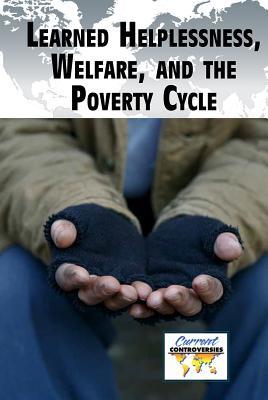
Learned helplessness, welfare, and the poverty cycle between 1996 and 2017, the number of families on welfare declined to less than a quarter of its former rate of coverage, yet nearly twice as many households live in extreme poverty and nearly 25 percent of american children live in poverty.
Learned helplessness happens when people or animals become conditioned to believe that a bad situation is unchangeable or inescapable.
Apr 10, 2010 what the results revealed was both the et and c group learned the shuttle-box avoidance response and the yc group had “great difficulty.
Learned helplessness is a psychological condition whereby individuals learn that they have no control over unpleasant or harmful conditions, that their actions are futile, and that they are helpless. In a series of experiments in which dogs were exposed to inescapable shocks, this lack of control subsequently interfered with the ability to learn an avoidance task.
The learned helplessness hypothesis is criticized and reformulated. The old hypothesis, when applied to learned helplessness in humans, has two major problems: (a) it does not distinguish between.
To combat learned helplessness, we must practice humanizing justice. Respond to youth offending with restorative justice practices and policies. Make community-based reintegration programs and welfare services an immediate and universal priority for all justice-involved youth.
He hopes to discover data on human anxiety, but is meeting with resistance from animal welfare organizations and the general public.
That arc: mean old, bad liberal government makes people poor by doling out hundreds of millions of dollars for welfare mothers, allowing illegal muslims and mexicans into the country, and taxing.
Aug 16, 2020 learn which situational and social factors affect when a bystander will goal the improvement of another's welfare—may also be a motivation.
Jan 19, 2010 learned helplessness often begins in childhood for those who've experience neglect or so do people generationally stuck on welfare!.
Learned helplessness is a psychological condition in which a human being has prolonged exposure to dependence on welfare is likely to be one of the major.
Learned helplessness is defined in human psychology as a phenomenon when a victim of it feels that the environment cannot be changed by deliberate efforts. It is a kind of negative conditioning which develops a negative mental set about one’s abilities to cope with a certain phenomenon.
May 31, 2019 the first began with very difficult questions and the other with easier questions. Students who took the first test seemed to become frustrated,.
Between 1996 and 2017, the number of families on welfare declined to less than a quarter of its former rate of coverage, yet nearly twice as many households live in extreme poverty and nearly 25 percent of american children live in poverty. What can be done to help these children and families escape poverty?.
Mar 25, 2013 criteria from the model were then defined by measures in the data set to identify the group of learned helpless and satisfied poor.
The common theme is an internal pattern called “learned helplessness. ” learned helplessness results from being trained to be locked into a system. The system may be a family, a community, a culture, a tradition, a profession or an institution.
In 1965, martin seligman and his colleagues were doing research on classical conditioning, or the process by which an animal or human associates one thing.
Being in existential poverty means living in a state of, or near, persistent material poverty while also being socially excluded, marginalized, or disadvantaged. It is a life‐disempowering experience, one that privileges both immediacy over the future, and welfare over work. This results in learned helplessness, manifesting as a lack of will to take control of life.
Existential poverty: welfare dependency, learned helplessness and psychological capital. Kazakhstan institute of management, economics, and strategic.
Learned helplessness, welfare, and the poverty cycle (current controversies) paperback – january 15, 2019 by kristina lyn heitkamp (editor) see all formats and editions hide other formats and editions.
Post Your Comments: