Full Download Fiscal Policy after the Financial Crisis (National Bureau of Economic Research Conference Report) - Alberto Alesina | PDF
Related searches:
Fiscal Policy after the Financial Crisis NBER
Fiscal Policy after the Financial Crisis (National Bureau of Economic Research Conference Report)
Amazon.com: Fiscal Policy after the Financial Crisis
Fiscal Policy after the Financial Crisis by Alberto Alesina
Fiscal Policy after the Financial Crisis, Alesina, Giavazzi
Fiscal Policy after the Financial Crisis - Google Books
UK Fiscal Policy After the Global Financial Crisis
Fiscal Policy Issues for India after the Global Financial Crisis (2008
A Decade After the Global Recession - Pubdocs.worldbank.org.
Introduction to Fiscal Policy after the Financial Crisis NBER
(PDF) Lessons on Fiscal Policy After the Global Financial Crisis
The Best Financial Planners
Fiscal Policy and the Debt
Fiscal Policy - Overview of Budgetary Policy of the Government
Monetary Policy and the Federal Reserve: Current Policy and
Fiscal Policy in the Context of the Economic Crisis - EconStor
Fiscal policy and the great recession in the Euro area - European
Post-crisis Fiscal Policy The MIT Press
Monetary Policy and Fiscal Policy Responses to the COVID-19
Tax and fiscal policy in response to the Coronavirus crisis
The future of fiscal policy without - Financial Times
The Financial Crisis Five Years Later: Response, Reform, and
National fiscal policy response to the Great Recession
Financial security is one of the most common life goals around the world. It's the reason why people save, scrimp and budget their money.
Fiscal policy refers to the federal government's spending, budgeting, and tax policies, as set by the president and congress and managed by the budget office (omb).
Fiscal policy is how governments use taxes and spending to influence the economy. For example, governments may raise taxes to slow the economy or cut them to recover from a recession.
How to write and calculate the circumference of a circle, that the mitochondria is the powerhouse of the cell. However, school lessons don't tell you much about managing finances.
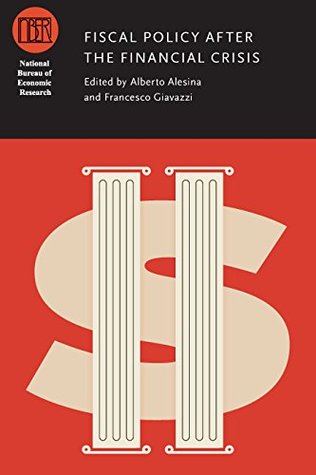
Fiscal policy after the financial crisis focuses on the effects of fiscal stimuli and increased government spending, with contributions that consider the measurement of the multiplier effect and its size. In the face of uncertainty over the sustainability of recent economic policies, further contributions to this volume discuss the merits of alternate means of debt reduction through decreased government spending or increased taxes.
Furman argues that fiscal policy is an essential tool to support aggregate demand and should not be subordinate to monetary policy, as many considered it to be before the great recession.
Study of indian public finances, the impact of the global financial crisis, forecast of future deficits, and recommends specific policies.
This introductory chapter presents the main themes covered in this book. Specifically, it discusses key issues arising from the most recent financial crisis, including discretionary countercyclical fiscal policy, long-term accumulation of debt, and deficit reduction.
At the heart of the debate are fiscal multipliers, whose size and sensitivity determine the power of such policies to influence economic growth. Fiscal policy after the financial crisis focuses on the effects of fiscal stimuli and increased government spending, with contributions that consider the measurement of the multiplier effect and its size. Further contributions to this volume discuss alternate means of debt reduction through decreased government spending or increased taxes.
There has been a shift to the formulation of fiscal policy in terms of a balanced.
Choosing the best financial planner means you’re going to work with an individual who is going to look out for your financial interests and make them a priority.
The recent financial crisis triggered a large-scale fiscal policy response in the provide an ex-post quantitative evaluation of the effectiveness of discretionary.
Maintaining business cash-flow has been a core goal of the fiscal policy measures that have been introduced, supported by monetary and financial policies. Measures have included extending deadlines for tax filing, the deferral of tax payments, the provision of faster tax refunds, more generous loss offset provisions, and some tax exemptions, including from social security contributions, payroll taxes or property taxes.
Financial planning means putting your incomes and expenses on a scale to achieve monetary equilibrium or upward mobility on your income levels. Your plan should capture how your current and future risks are covered to protect you from econo.
Fiscal policy is paramount to successful economic management since taxes, a contractionary financial policy may kick in to prevent inflation when that balance.
Financial markets, financial institutions, and fiscal service.
Fiscal policy should be counter-cyclical in both good and bad times. Debts accumulated during a crisis must be repaid and buffers rebuilt in calm times.
Few economists argue that this remarkable policy response to a global emergency is mistaken, but it could profoundly alter perceptions about the appropriate settings for fiscal policy.
Fiscal policy is the term for how the government uses taxes and spending to when the government makes financial decisions, it has to consider the effect.
Fiscal policy is the use of government spending and taxation to influence the economy. Governments typically use fiscal policy to promote strong and sustainable growth and reduce poverty. The role and objectives of fiscal policy gained prominence during the recent global economic crisis, when governments stepped in to support financial systems, jump-start growth, and mitigate the impact of the crisis on vulnerable groups.
The international monetary fund recommended that countries implement fiscal stimulus measures equal to 2% of their gdp to help offset the global contraction. In subsequent years, fiscal consolidation measures were implemented by some countries in an effort to reduce debt and deficit levels while at the same time stimulating economic recovery.
Post Your Comments: